From Curiosity to Connection: Understanding and Weaving Social Bonds That Make People Stay
Why do most communities lose people after the first interaction? This mixed-methods research project for Toyota Woven City investigated the social, behavioral, and emotional drivers of long-term community engagement, translating findings into three research-backed design concepts.
⏰ Timeline
Oct’25 - Dec’25 (2 Months)
👥 Team
Roshni Ganesh
Meng Shi
Ivory Zhao
👩🏽💻 My Role
UX Researcher
UX Strategist
Setting the Context
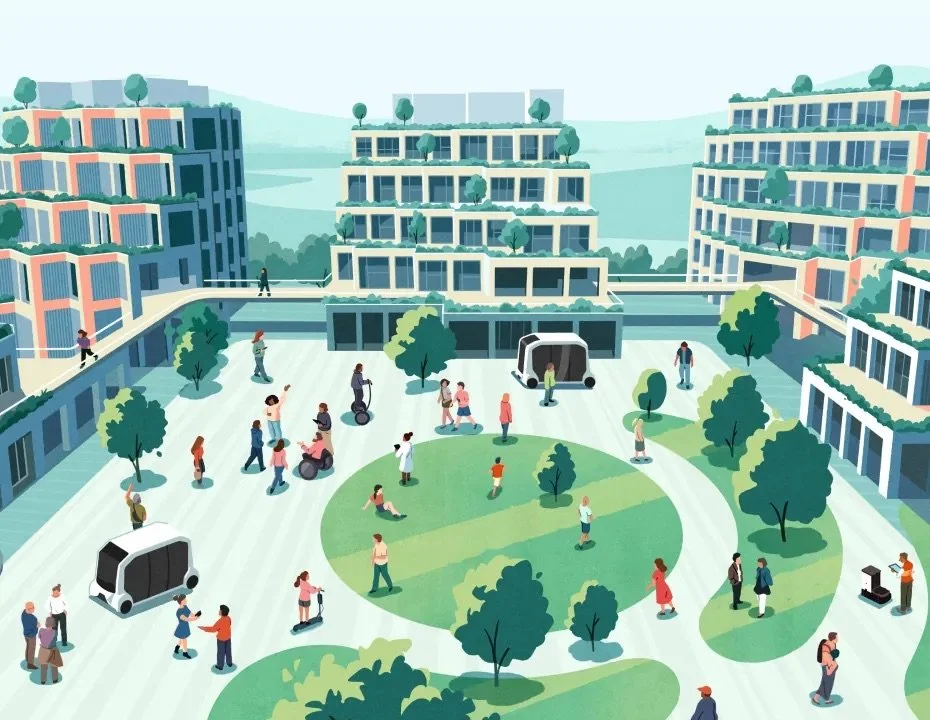
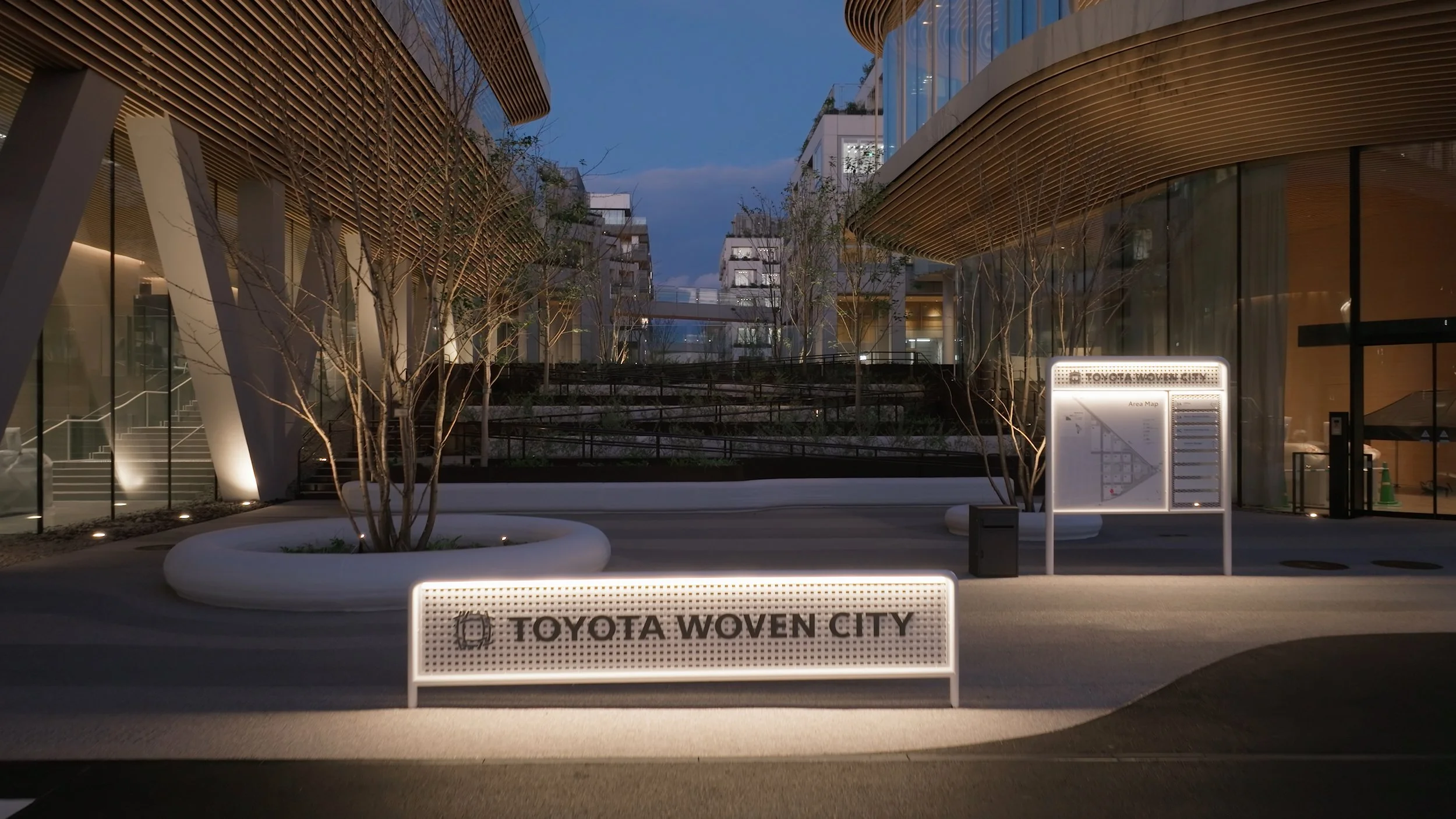
Woven City, an initiative by Woven by Toyota, is a living laboratory exploring future models of mobility, sustainability, and human-centered innovation.
The people of Woven City:
Inventors
Inventors include Toyota Group teams, external companies, startups, and academic institutions collaborating to design, test, and refine new mobility-focused products and services.Weavers
Weavers are residents and visitors of Woven City who bring diverse perspectives and lived experiences, participating directly in co-creation through daily interaction, experimentation, and feedback.
What motivates people to become active participants in innovation communities, and what sustains their engagement?
Secondary Research
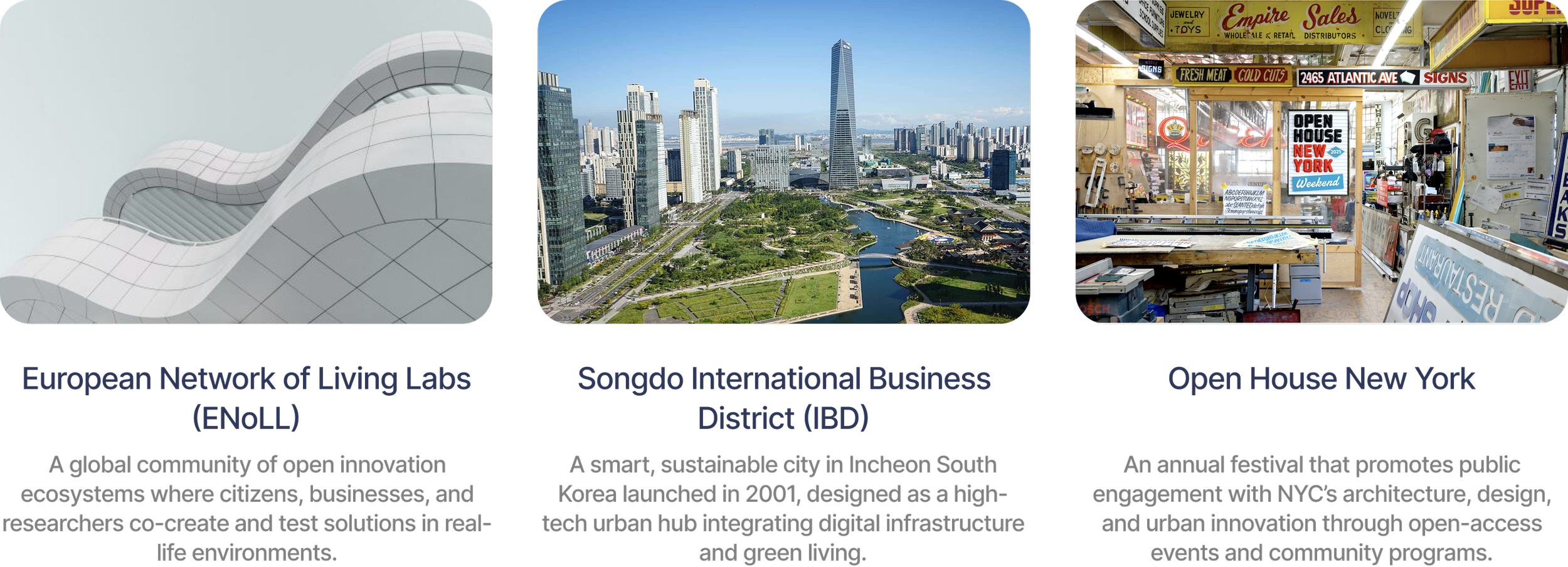
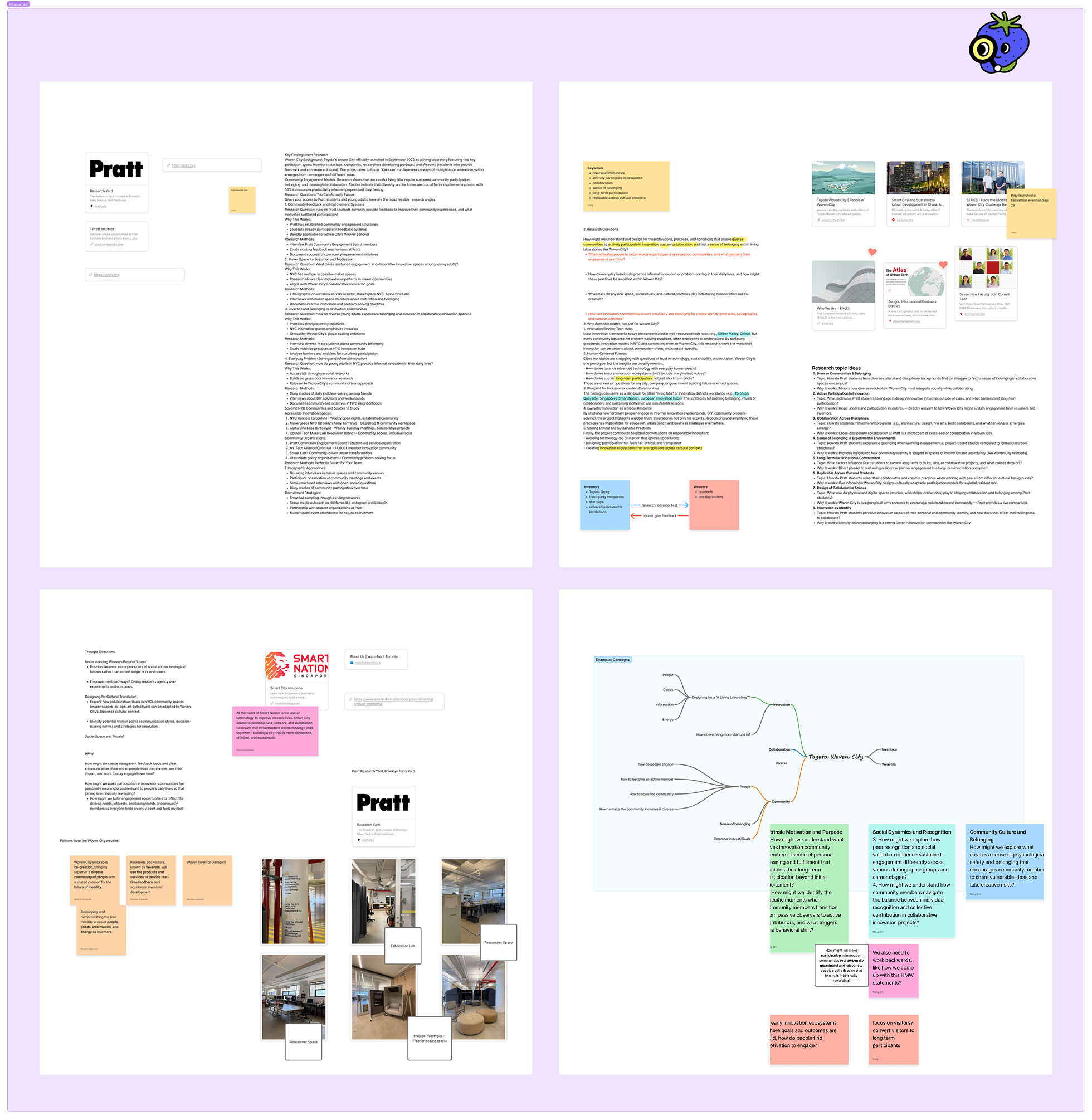
Before we talked to anyone, we did our homework. We looked at three very distinct innovation communities for inspiration: The European Network of Living Labs (ENoLL), Songdo International Business District in South Korea, and Open House New York (OHNY).
OHNY turned out to be the most revealing. It's an annual festival celebrating NYC's architecture and urban design, and it had something we kept noticing across all three: two distinct types of people.
First-timers who show up curious and wide-eyed, and
Active contributors like the volunteers and ambassadors, who had, at some earlier point, been exactly those first-timers.
But the journey connecting them was invisible.
That gap became our obsession. What actually happens in the middle? What's the invisible bridge that turns a one-time visitor into someone who rolls up their sleeves and gets involved?
Because that gap points to a problem most communities share:
Early drop-off,
Shallow engagement after a first interaction, and
Members who never develop a real sense of ownership or belonging.
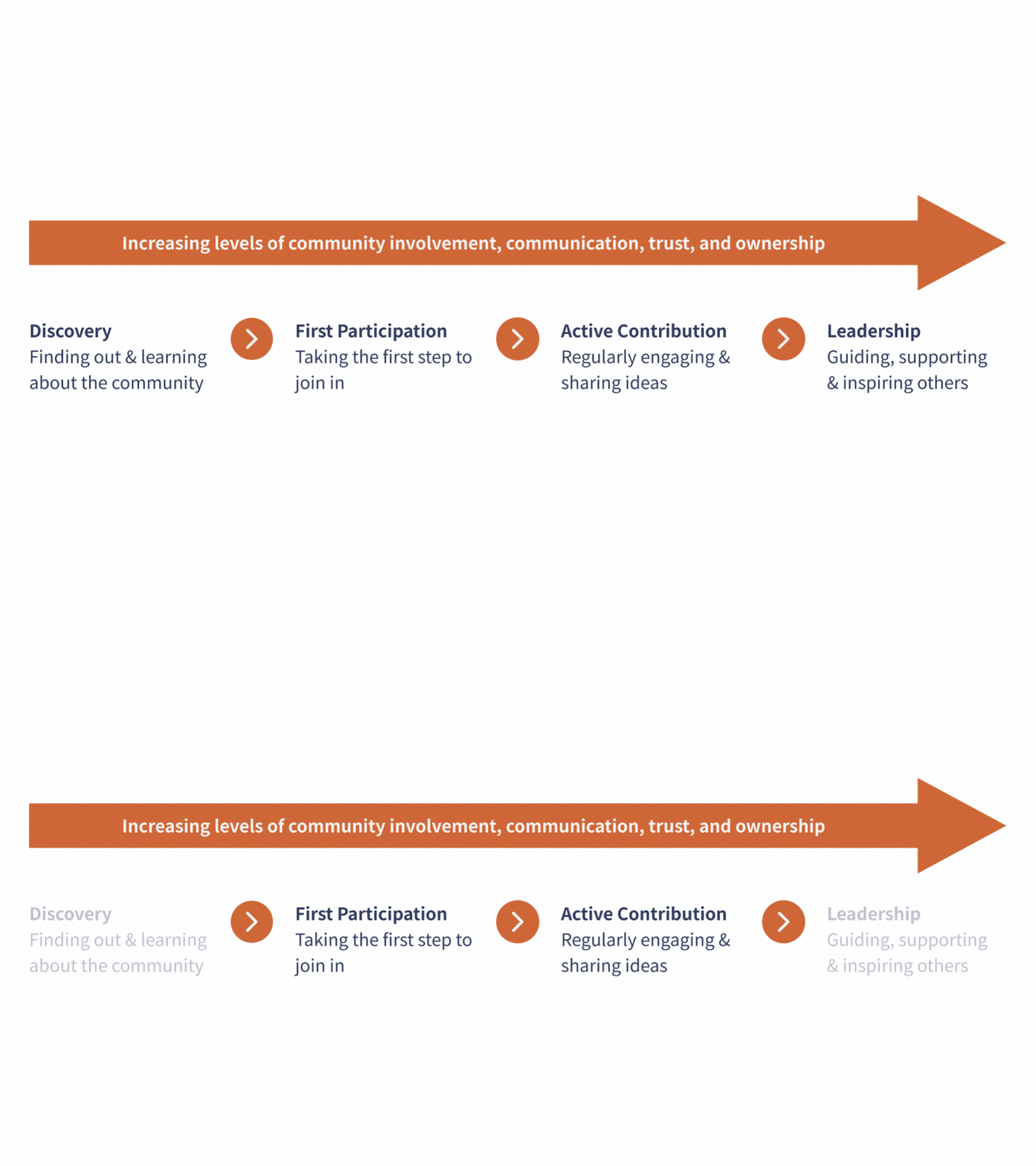
After learning about the science behind engagement journeys, we narrowed our focus to two key stages: first participation and active contribution, as they form the highest-leverage intervention points for design because:
Prevent early drop-off. Research shows that roughly 90% of people stop after their very first participation, and the right experience design strategies can change that.
Lay the foundation for growth. First contributions shape habits and identity. Support people early, and curiosity becomes lasting engagement.
Strengthen the social fabric. When people feel seen and empowered to co-create, inclusive innovation stops being a vision; it becomes everyday life.
Problem-focus
Image Credits: Toyota Woven City
The Challenge
How might we create community experiences that turn first participation into active contribution?
Primary Research
Key Insights
INSIGHT 1Social friendships and trusted support networks are the strongest drivers of joining and staying engaged in a community.
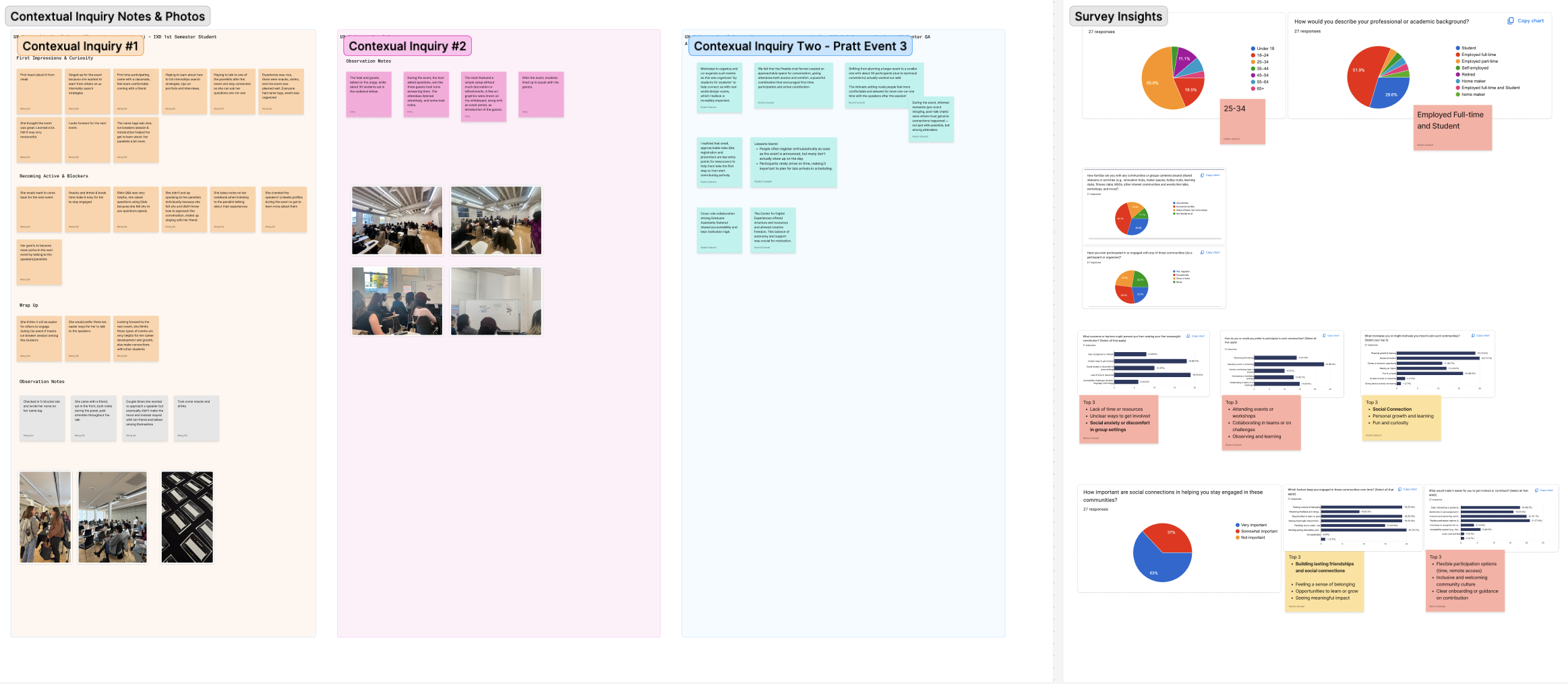
74% of participants said lasting friendships were key to sustained engagement. 63% said social connections were very important for staying active.
What did we set out to learn?
How do people discover and join communities?
What motivates first participation?
What sustains long-term engagement?
Where and why do people disengage?
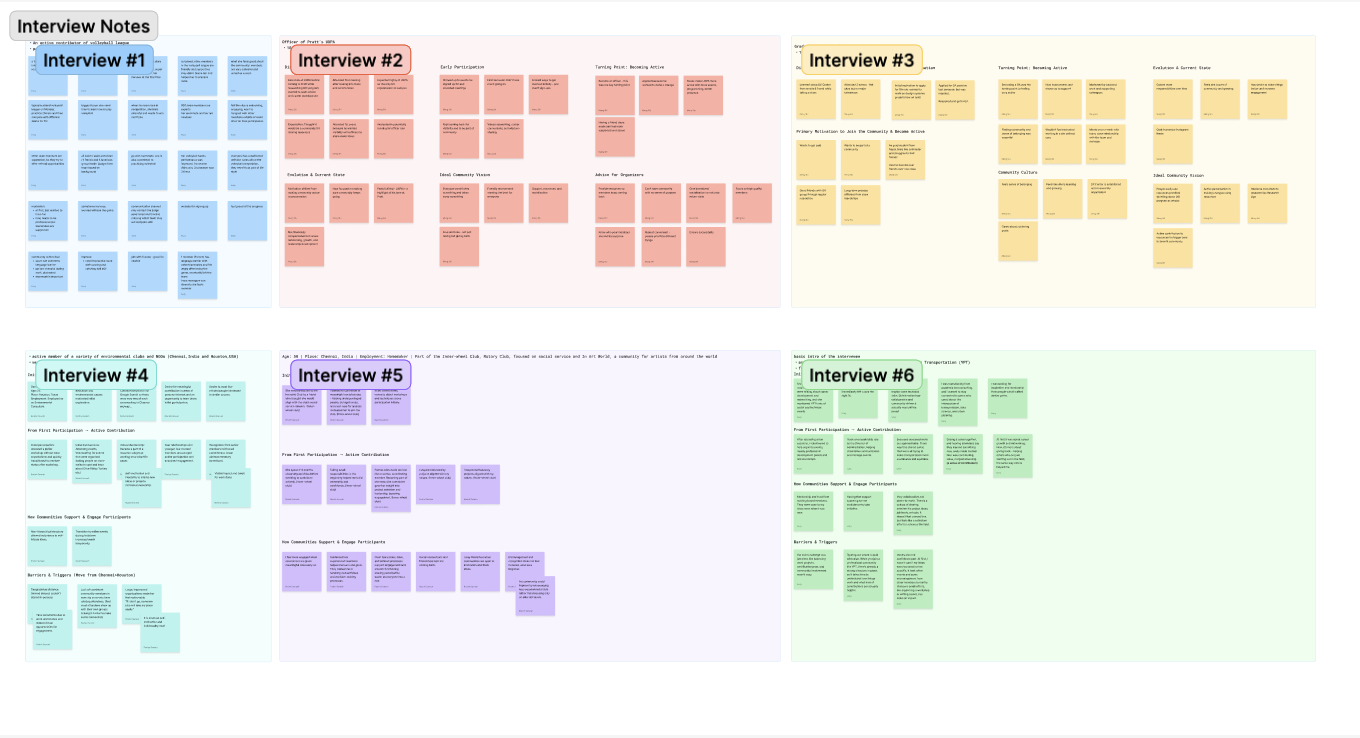
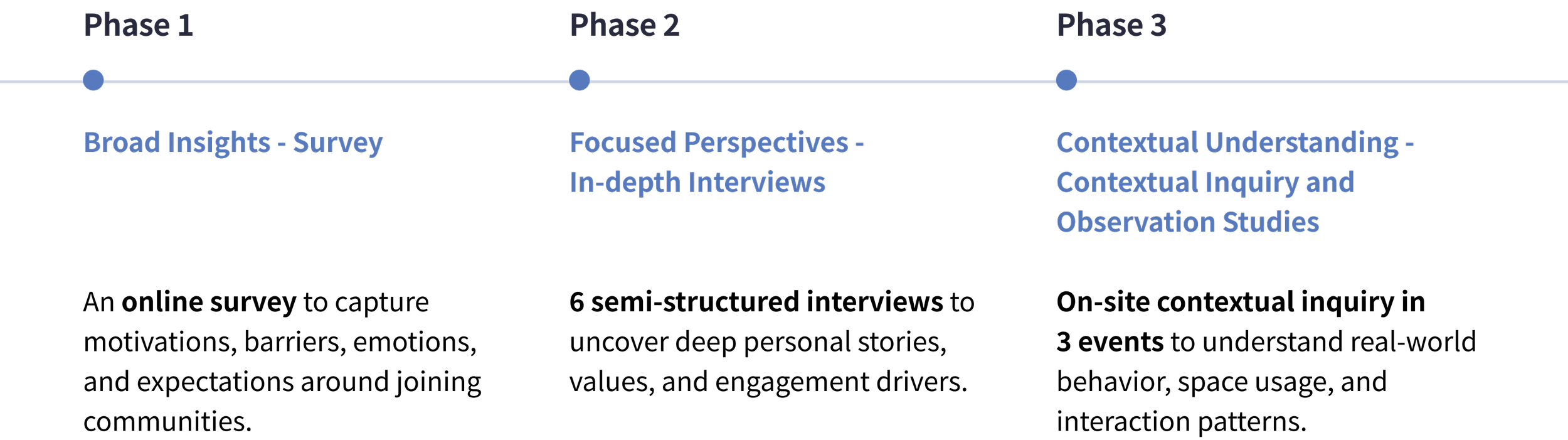
We ran a three-phase study designed to move from broad signal to lived experience to real-world behavior.
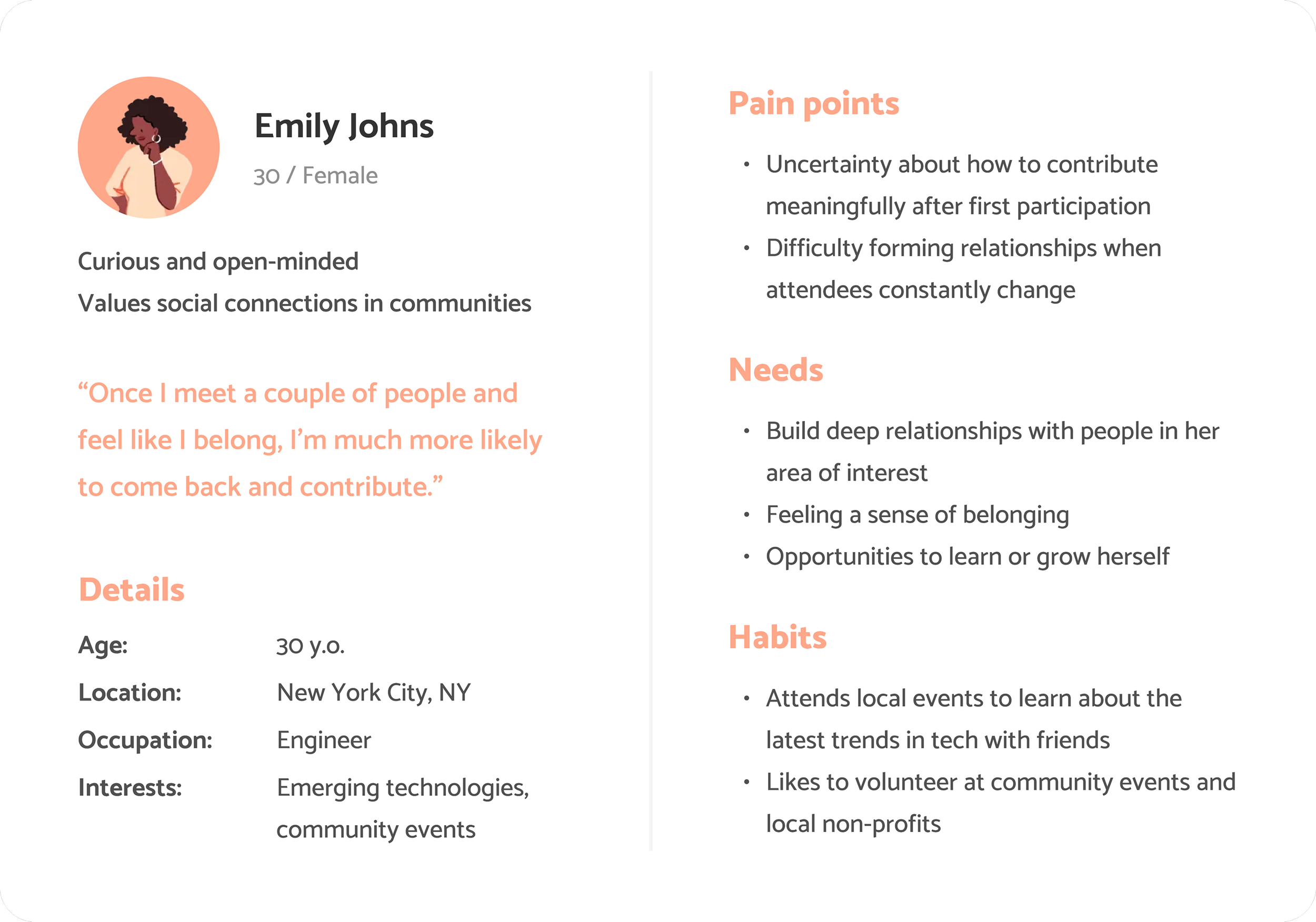
After synthesizing our findings, we distilled the patterns into a single representative persona, “Emily”- our north star for every design decision that followed.
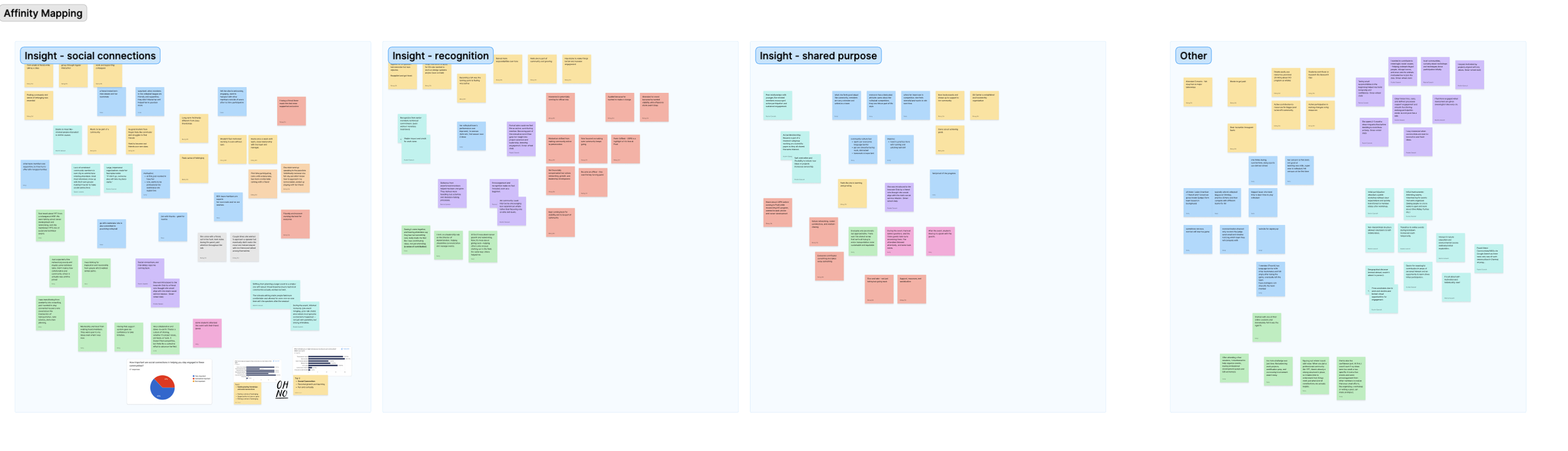
INSIGHT 3Having a shared goal among community members and visible progress sustains participants’ motivation.
56% preferred communities with team-based collaboration. 70% cited personal growth as a long-term motivator.
Solution-focus
Brainstorming & Ideation
Step 1:
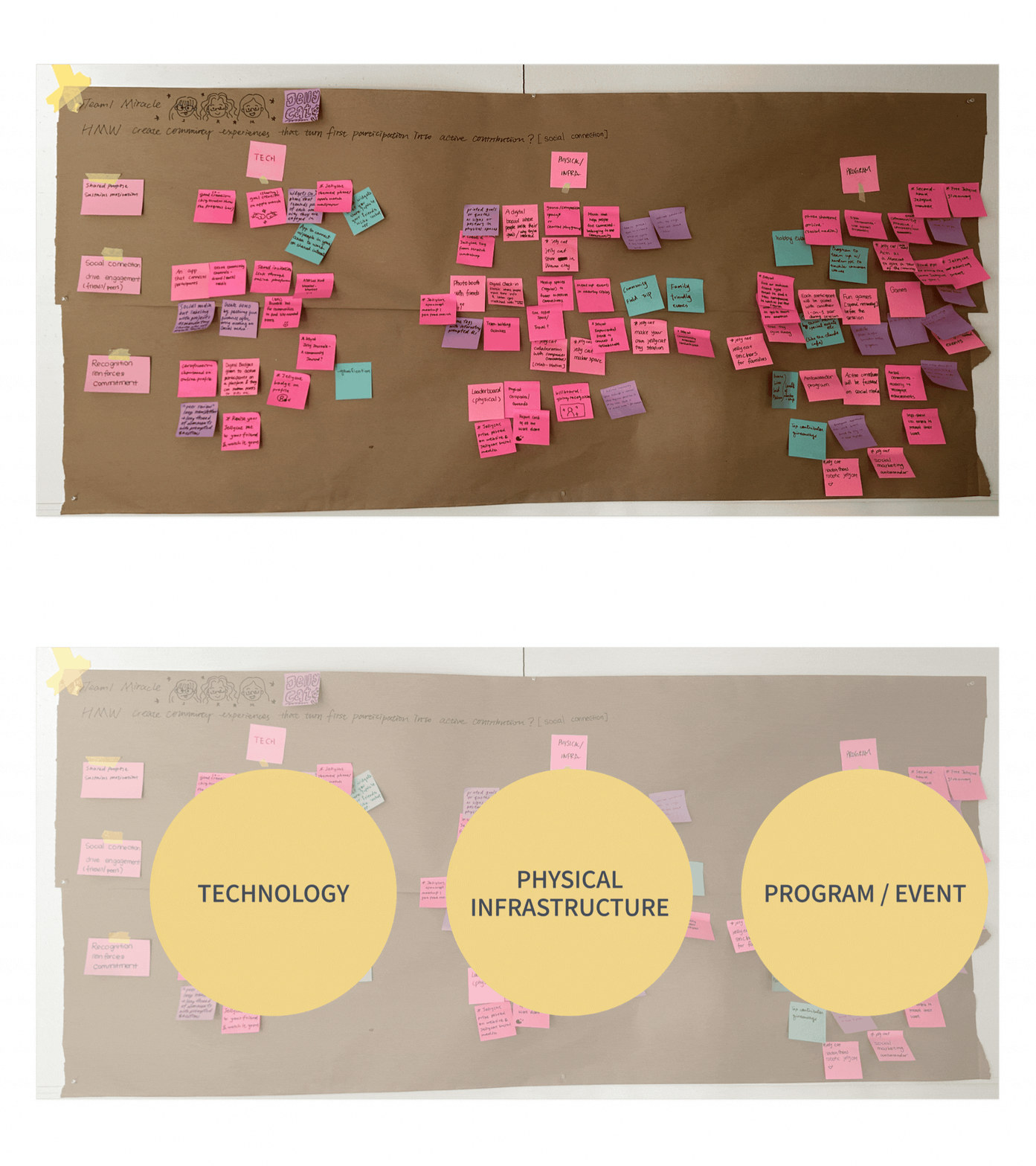
We brainstormed with a single focus: leveraging social connections to turn Emily from a first-time participant to an active contributor across three territories: Technology, Physical Infrastructure, and Programs/Events.
INSIGHT 2Recognition reinforces commitment - when achievements are acknowledged, motivation and pride increase, driving continued participation.
Participants described recognition from peers, not rewards or incentives as the catalyst that made them want to keep showing up.
Persona Mapping
How might we leverage social connections to turn first participation into active contribution in innovation communities?
Proposed Solutions
Step 2:
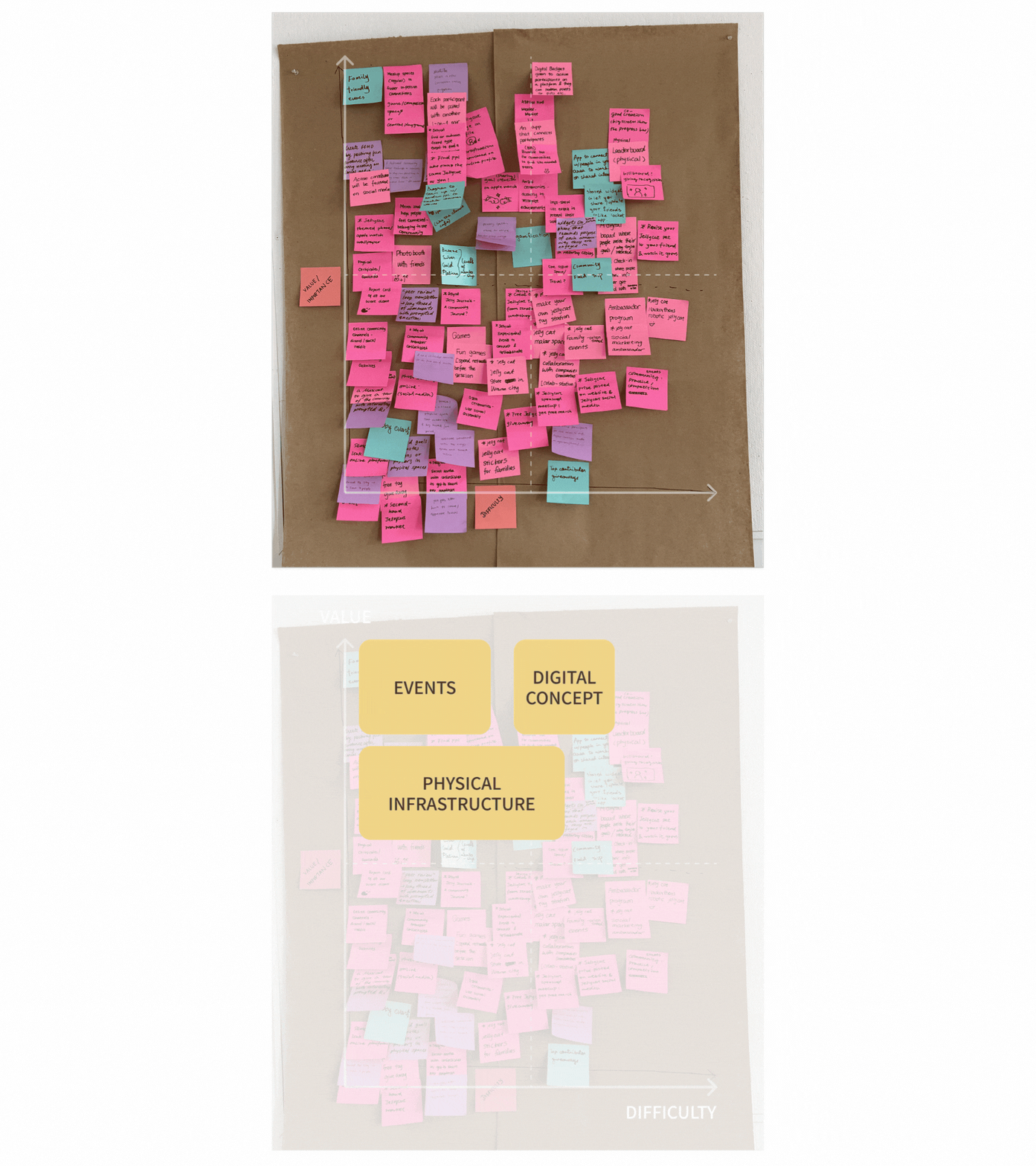
Then we ran a Value/Difficulty Prioritization Matrix. The concepts that rose to the top were high-value and low-to-mid difficulty- practical enough to actually build, meaningful enough to actually matter.
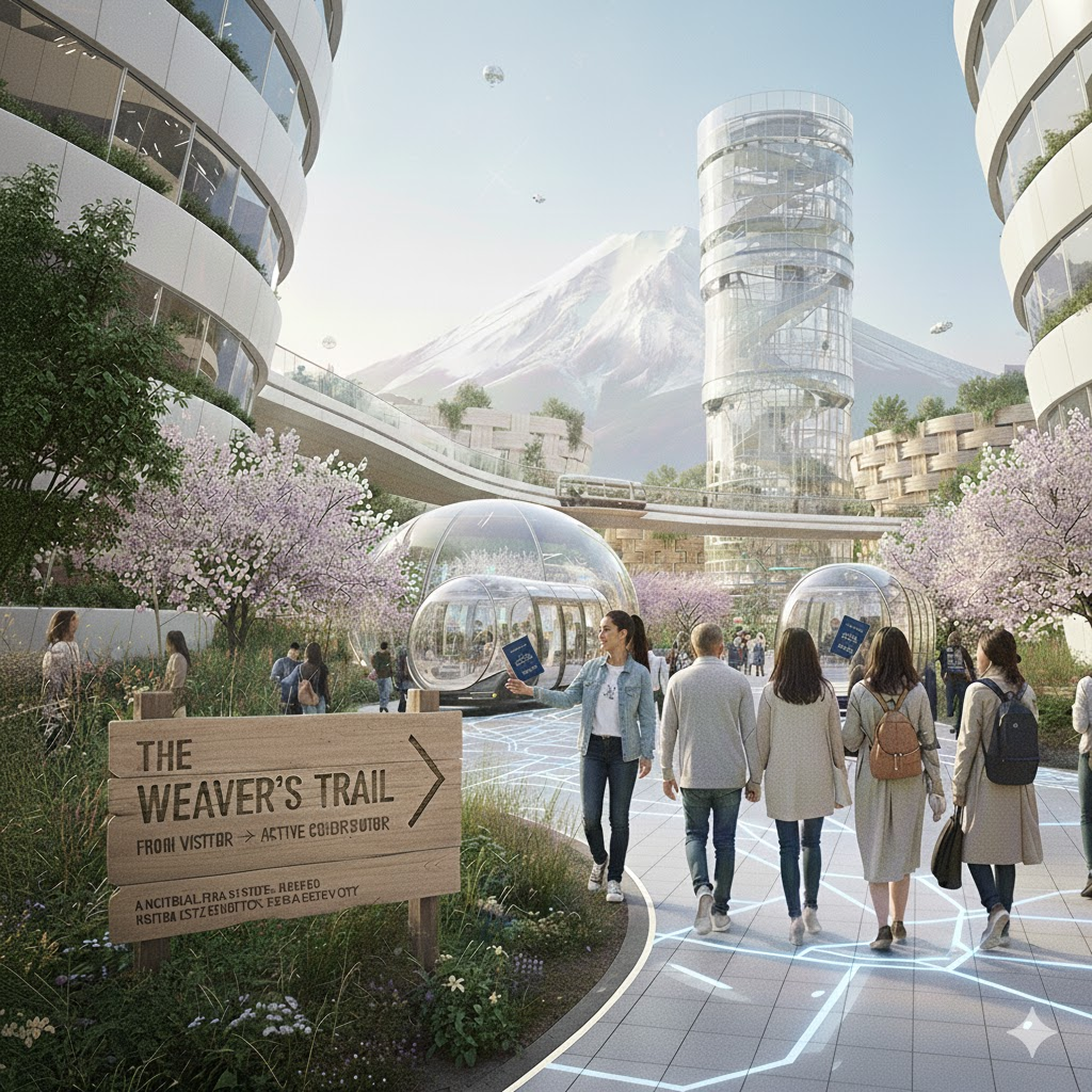
CONCEPT 1 | PROGRAM/EVENTThe Weaver’s Trail: From Visitor → Active Contributor
A National Park Service-inspired Visitor Experience for Toyota Woven City
The Weaver's Trail is a National Park Service–inspired visitor experience built on one belief: social connections drive engagement. Through shared exploration with guides and peers, visitors build genuine social connections along the way.
The Welcome Center doesn't just orient visitors, it connects them to values, people, and a shared journey. Visitors learn city values, choose a themed trail, meet a Weaver Guide, and receive a Weaver Passport that transforms exploration into action. From there, Weaver Guides bring city systems to life along Themed Contribution Trails, while contribution points invite visitors to engage with and provide feedback on live innovation initiatives and discover how they can get involved today and in the future.
Rooted in Toyota's own philosophies of Genchi Genbutsu (“go and see for yourself”) and Kaizen (“culture of constant improvement”), the trails and shared activities naturally move people from passive observers to active participants.
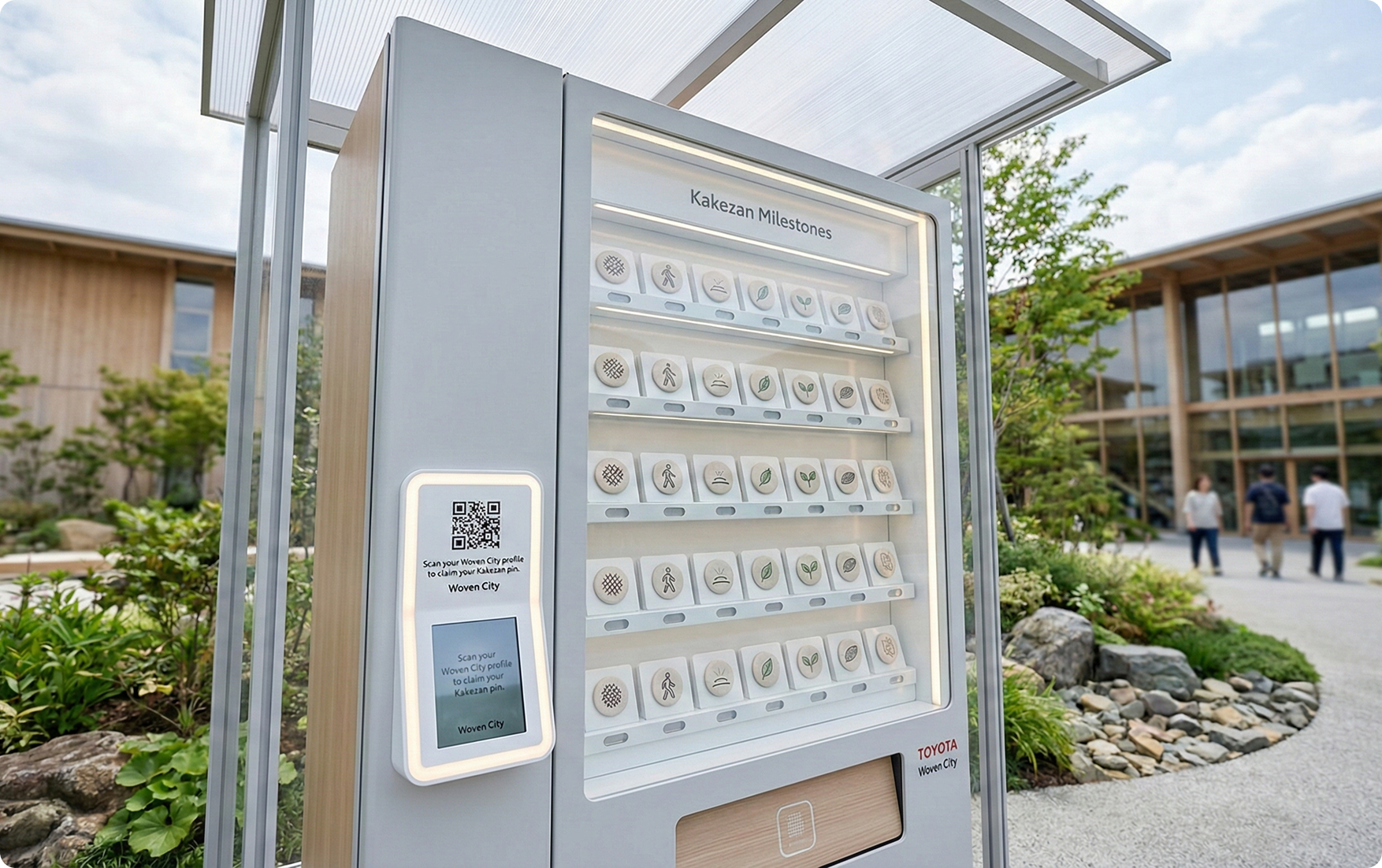
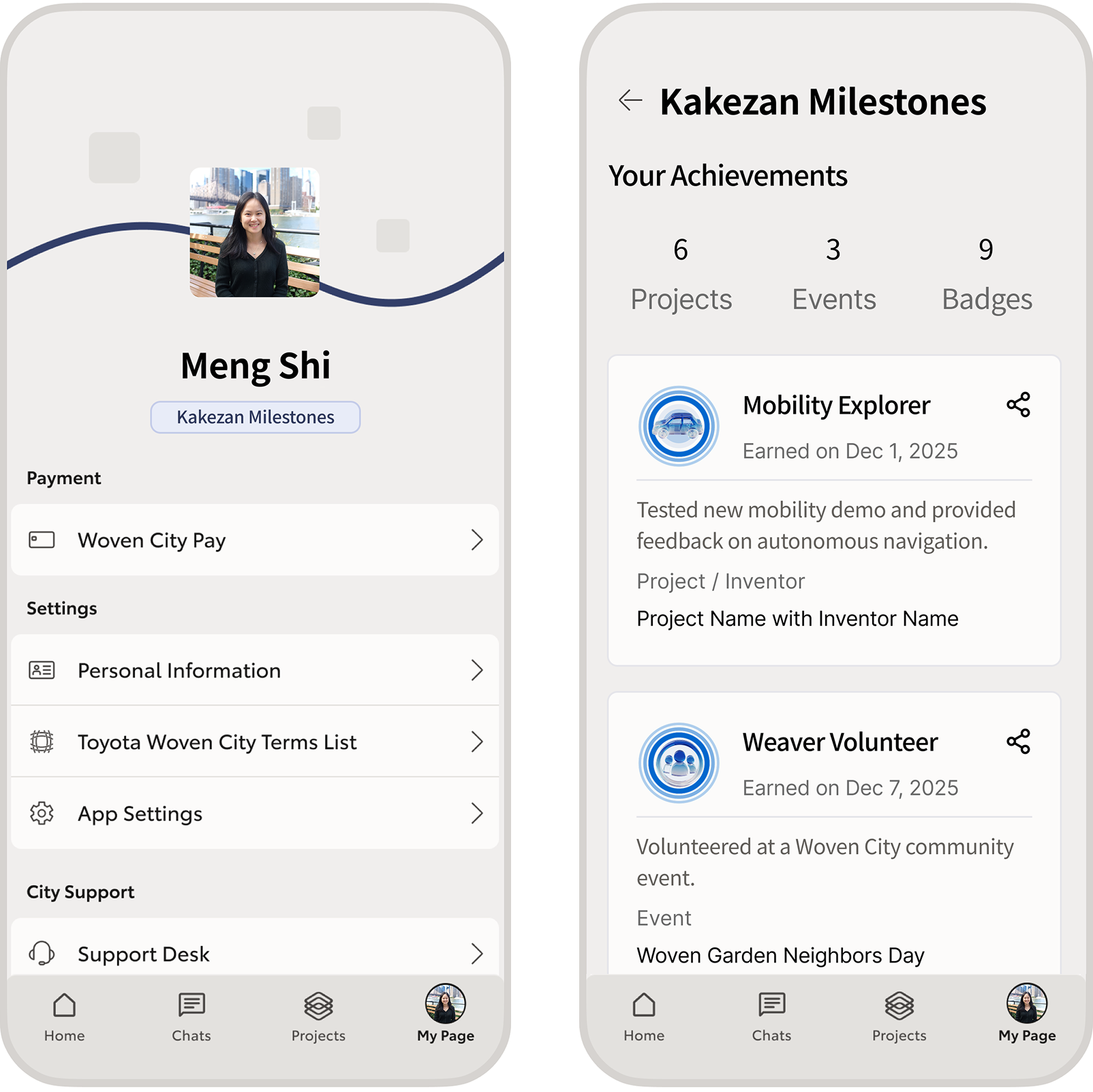
CONCEPT 2 | TECHNOLOGYKakezan Milestones
A co‑creation award system that celebrates Weavers’ contributions with digital milestones and physical pins.
Kakezan Milestones is a co-creation award system proposed as a new feature for the existing Woven City app. Directly addressing our insights on recognition and visible progress, it ensures every contribution, whether a test, co-creation session, or community event, is captured as a digital milestone badge on a resident's profile, linked to the specific project it supported and shareable with friends, family, and colleagues.
But recognition doesn't stop at the screen. For key milestones, residents can visit a dedicated on-site vending machine, scan their profile QR code, and claim a physical collectible pin, making their contribution tangible, wearable, and something worth talking about.
By turning every act of participation into something visible, meaningful, and shareable, Kakezan Milestones reinforces a proud identity as an active Weaver, strengthening commitment and sustaining motivation over time.
CONCEPT 3 | PHYSICAL INFRASTRUCTURELevel Up Lounge
Meetup space celebrate shared goals and progress of the community events.
The Level Up Lounge is a community meetup space designed to make collective progress impossible to ignore.
Large interactive screens display live goals and progress bars for ongoing projects, highlight active contributors by name, and feature participant photos uploaded from the app or taken at an on-site photo booth.
Contributions that would otherwise feel invisible become immediately visible and personally meaningful. By putting shared goals, recognition, and community memories on full display, the Lounge creates a sense of belonging that makes it easier for newcomers to stop attending and start contributing.
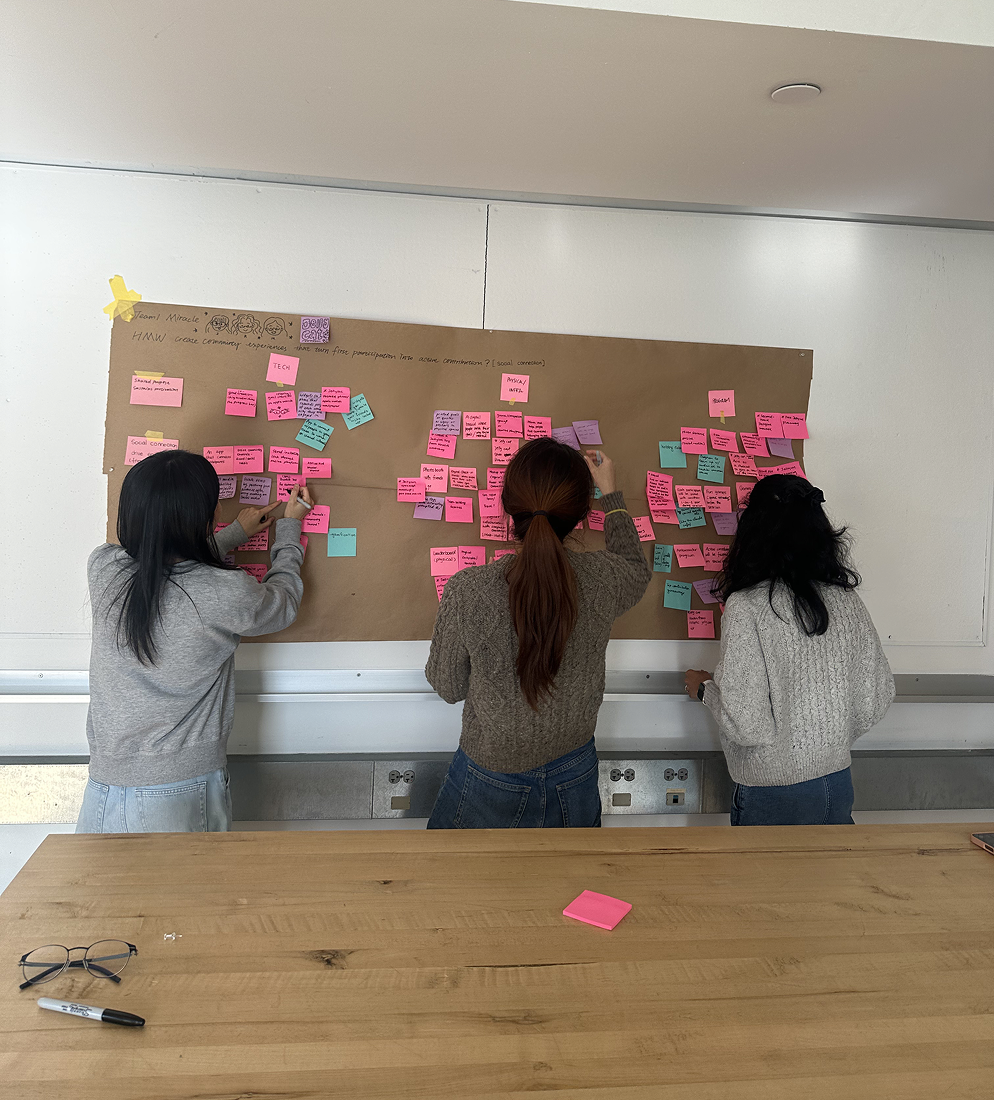
Image Credits: AI-generated Concept Image
Image Credits: AI-generated Concept Image
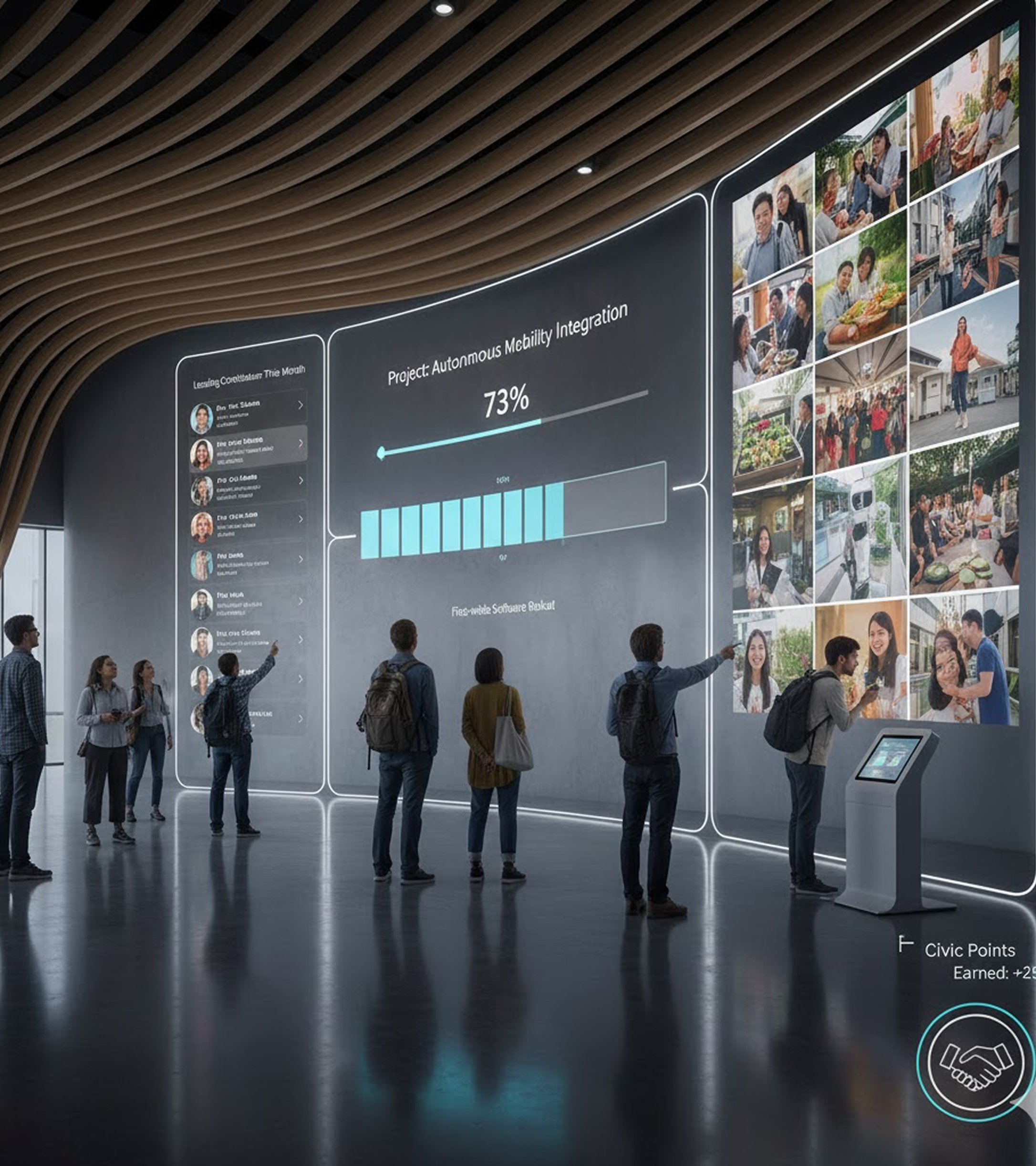
Image Credits: AI-generated Concept Image
Learnings and Client Testimonial
Key Learnings and more…
Designing for something that is still evolving is both challenging and exciting.
Because Woven City had only just launched, there were very few precedents or data points to rely on. That uncertainty pushed us to think more creatively and explore what community could look like in a city that is still taking shape.The challenge goes far beyond one city.
As we looked at different communities, we realized that many innovation ecosystems face the same problem; people show up with curiosity, but participation often fades before it turns into real ownership. The framework we developed for Woven City can apply to many other communities trying to support that journey from curious participant to active contributor.
Want to dive deep?
Full research artifacts, process documentation, and supporting files are available in the appendix.
“Very impressive work and very nice ideas! The insights around social connection and acknowledgement were spot on. And even the process is impressive.”