From Confusion to Clarity: Designing Better Research Support Communication Systems for Pratt’s Diverse Faculty
A service design project that improves how faculty navigate research processes, supporting faculty success while strengthening institutional research identity and capacity.
⏰ Timeline
Oct’25 - Dec’25 (2 Months)
👥 Team
Roshni Ganesh
Carol Bai
Merlyn Koonamparampath
Rutuja Nagulpelli
👩🏽💻 My Role
Service Designer
Overview
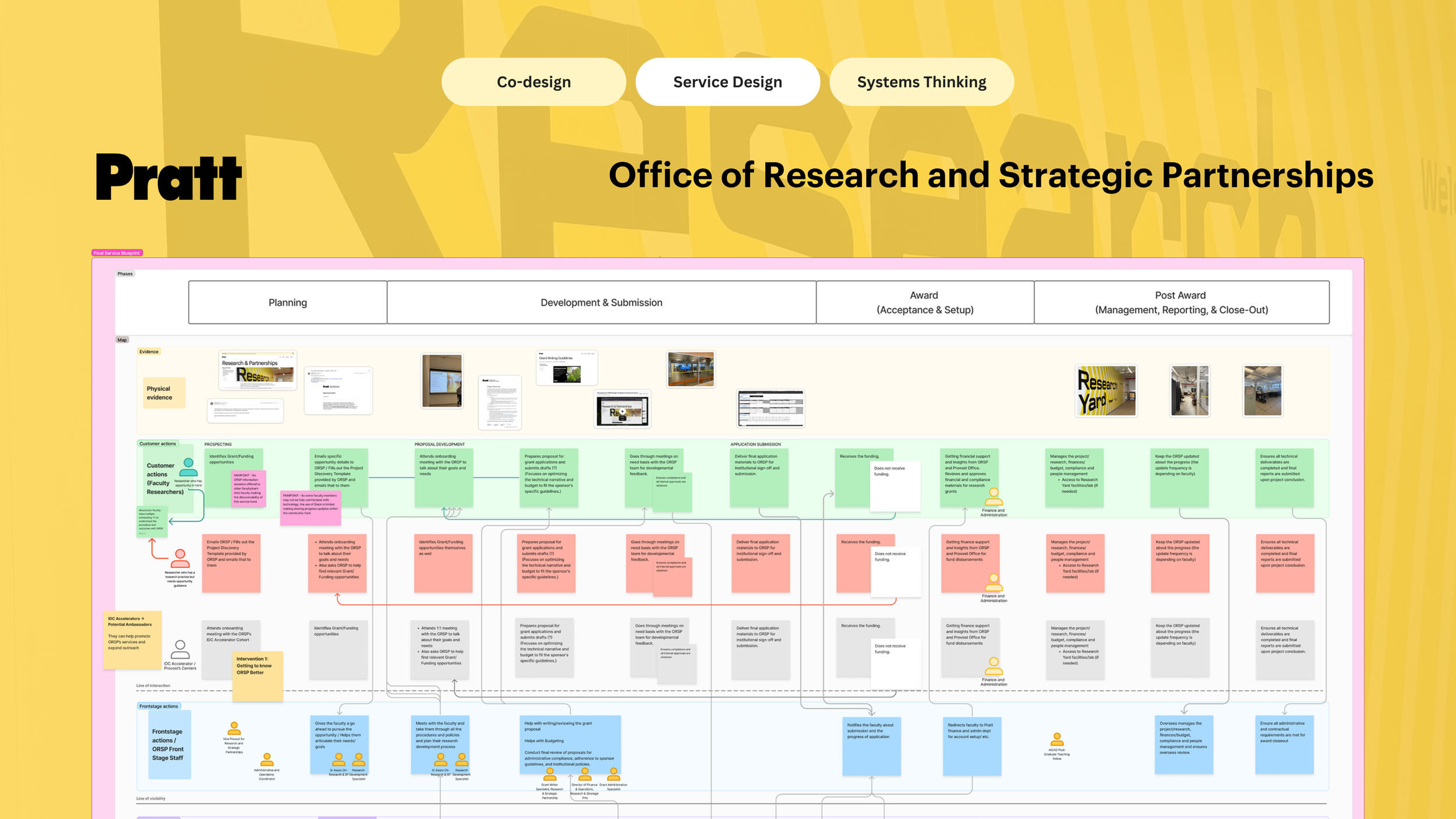
This service design project enhances how faculty engage with the Office of Research and Strategic Partnerships (ORSP) at Pratt Institute. Grounded in systems thinking and participatory design, it focuses on improving communication from ORSP to faculty.
While ORSP plays a key role in enabling research, partnerships, and funding opportunities across the institute, its processes, especially around project development, were fragmented, difficult to navigate, and inconsistently communicated.
ORSP plays a key role in helping faculty with:
Identify funding opportunities
Project discovery and development
Proposal writing and budgeting
Compliance and IRB review
Post-award management
Project Goals
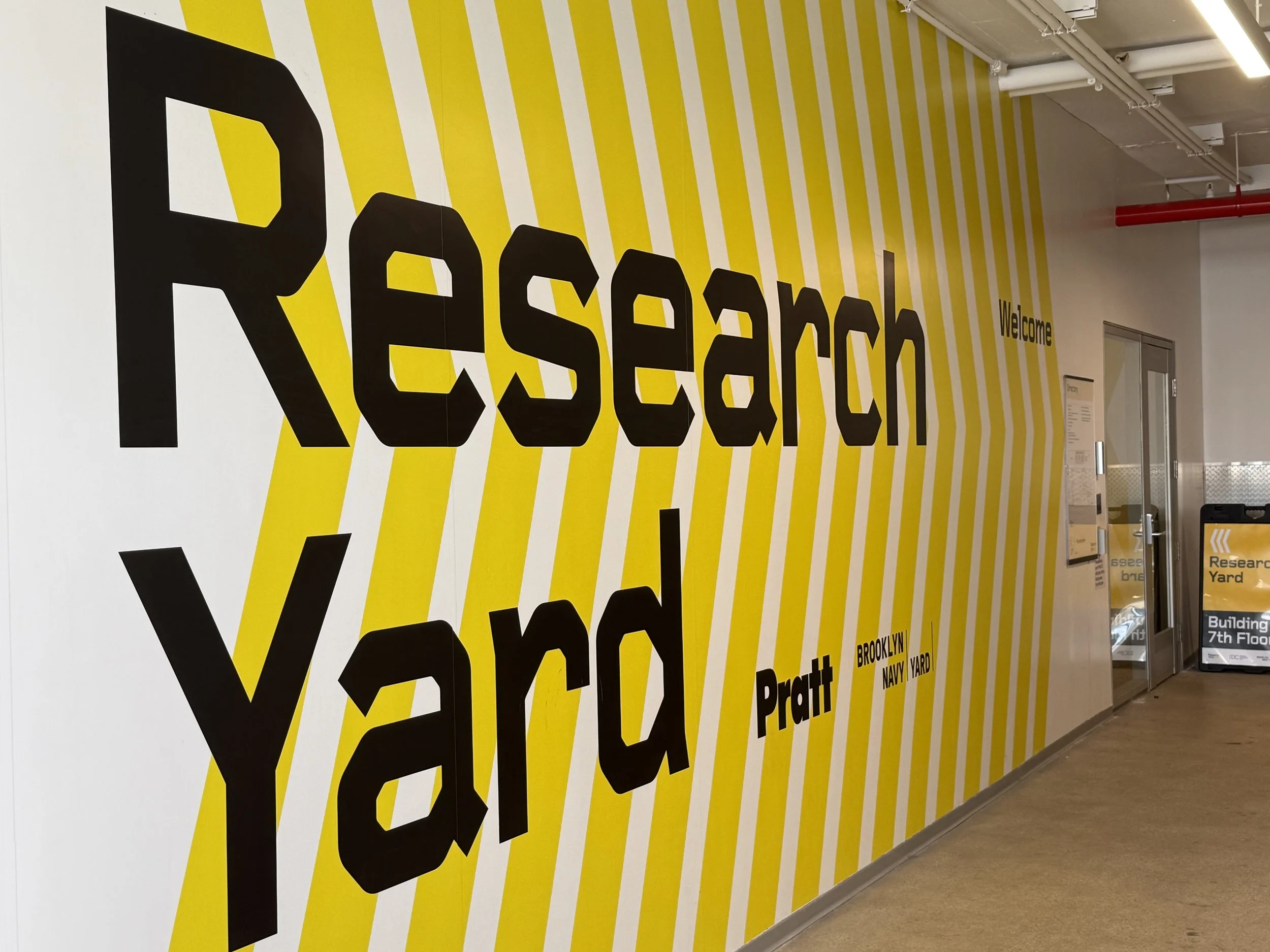
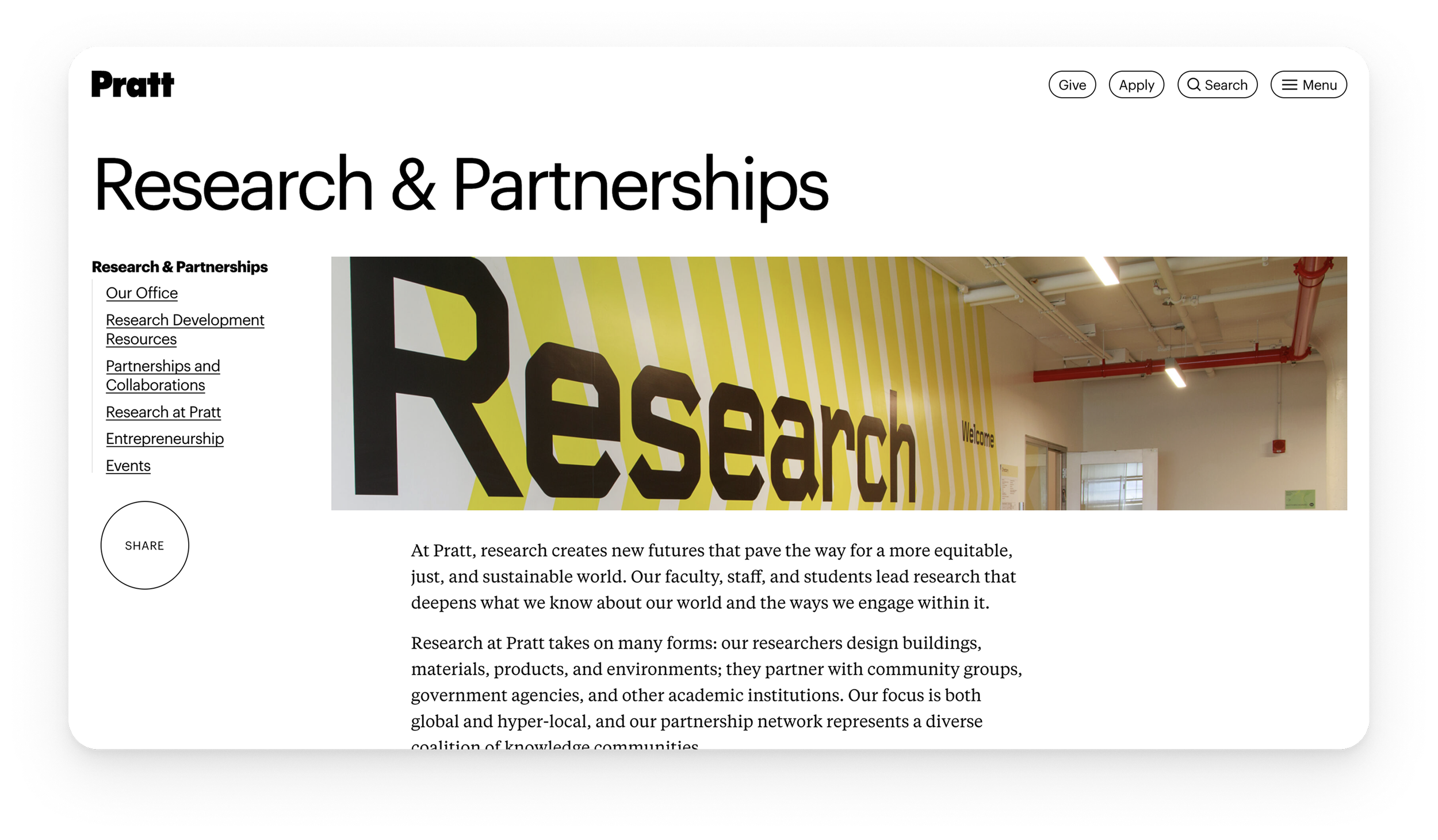
Image Credits: Pratt ORSP Website
1Improve communication from ORSP to faculty by defining the order of events
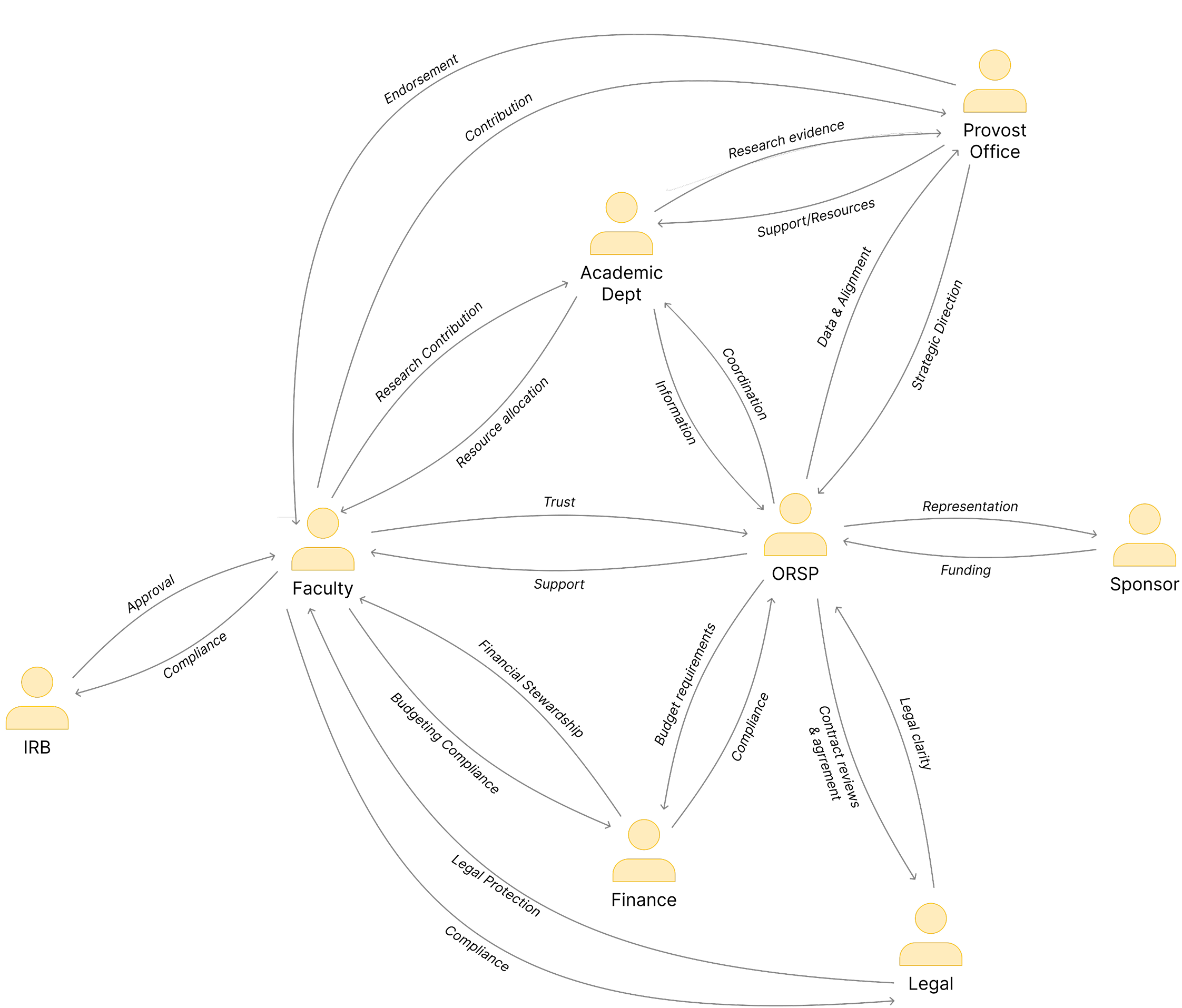
Pratt’s research ecosystem is driven by continuous value exchange between faculty, ORSP, and institutional partners, where each actor contributes and receives what is needed to move research forward.
Faculty contribute intellectual capital, innovation, and institutional prestige.
ORSP translates that innovation into fundable, compliant, and visible outcomes by coordinating the broader institutional ecosystem.
Institutional units (IRB, Finance, Legal, Academic Departments, and the Provost Office) provide the policies, approvals, compliance, and resources that make research possible, relying on ORSP to translate and manage these processes.
Together, these exchanges form a self-sustaining research ecosystem where value flows in multiple directions, supporting faculty success while strengthening institutional research capacity.
Co-design Goals
2Identify the challenges and needs at each stage of research development
3Define archetypes and how to use them to improve support for diverse Pratt faculty
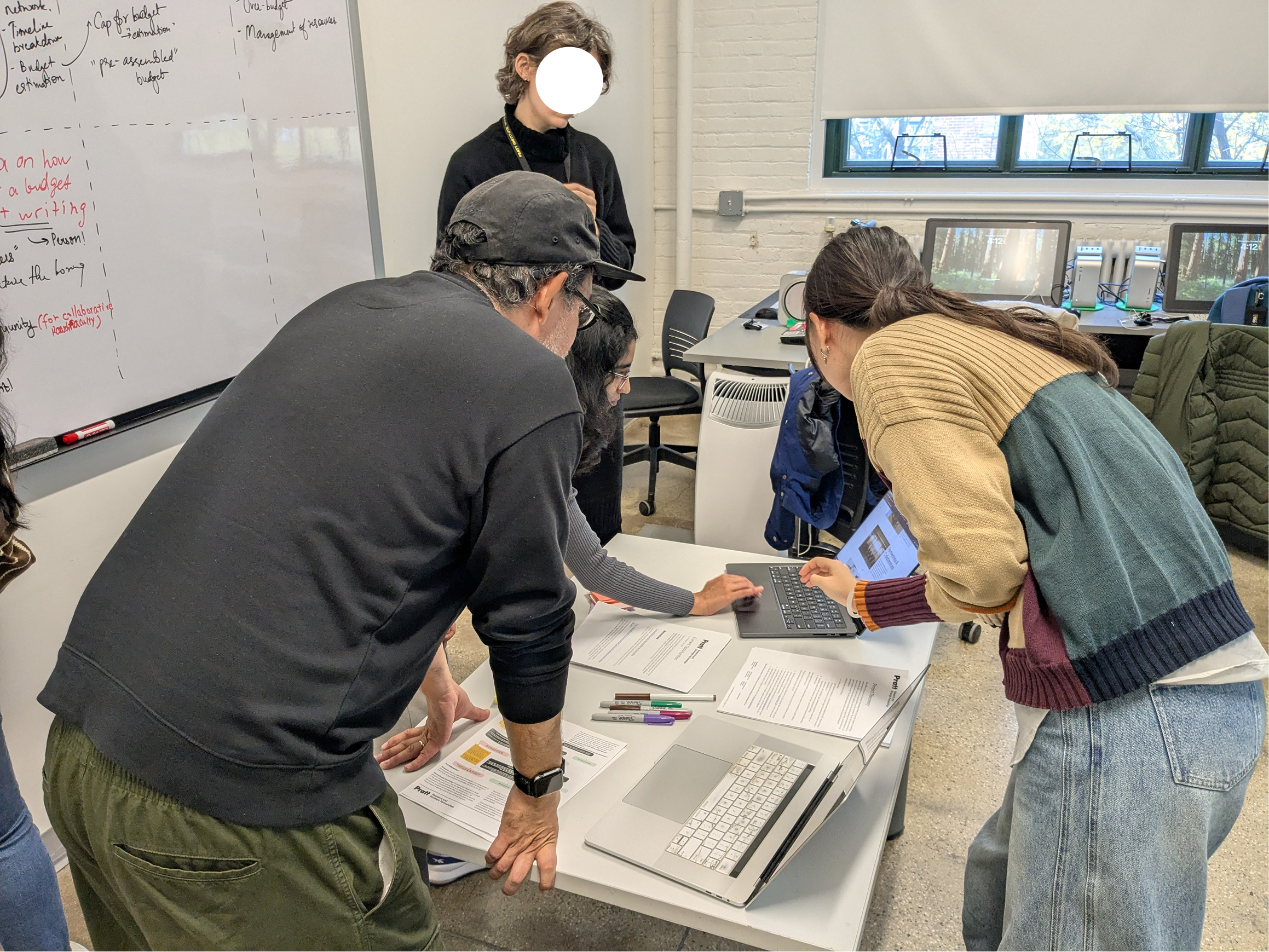
Co-design is a participatory design approach where the people who are directly impacted by a service become active partners in the design process, rather than passive subjects being studied.
In this case, Pratt faculty actively participated in shaping how communication between ORSP and faculty can be improved.
Instead of designing for them, we design with them.
1Understand how faculty define their research personalities at Pratt
3Co-create ideas for a better communication experience with ORSP
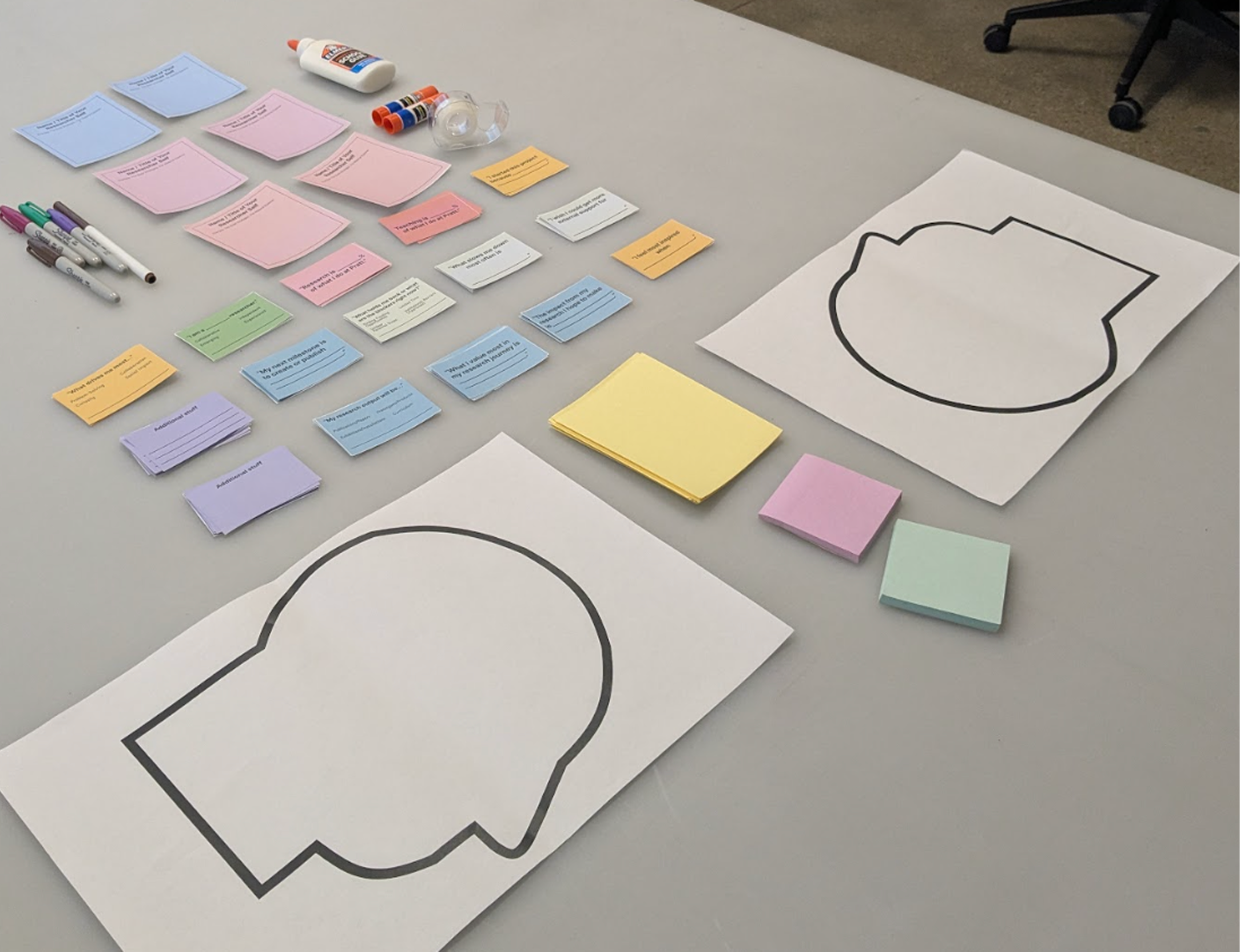
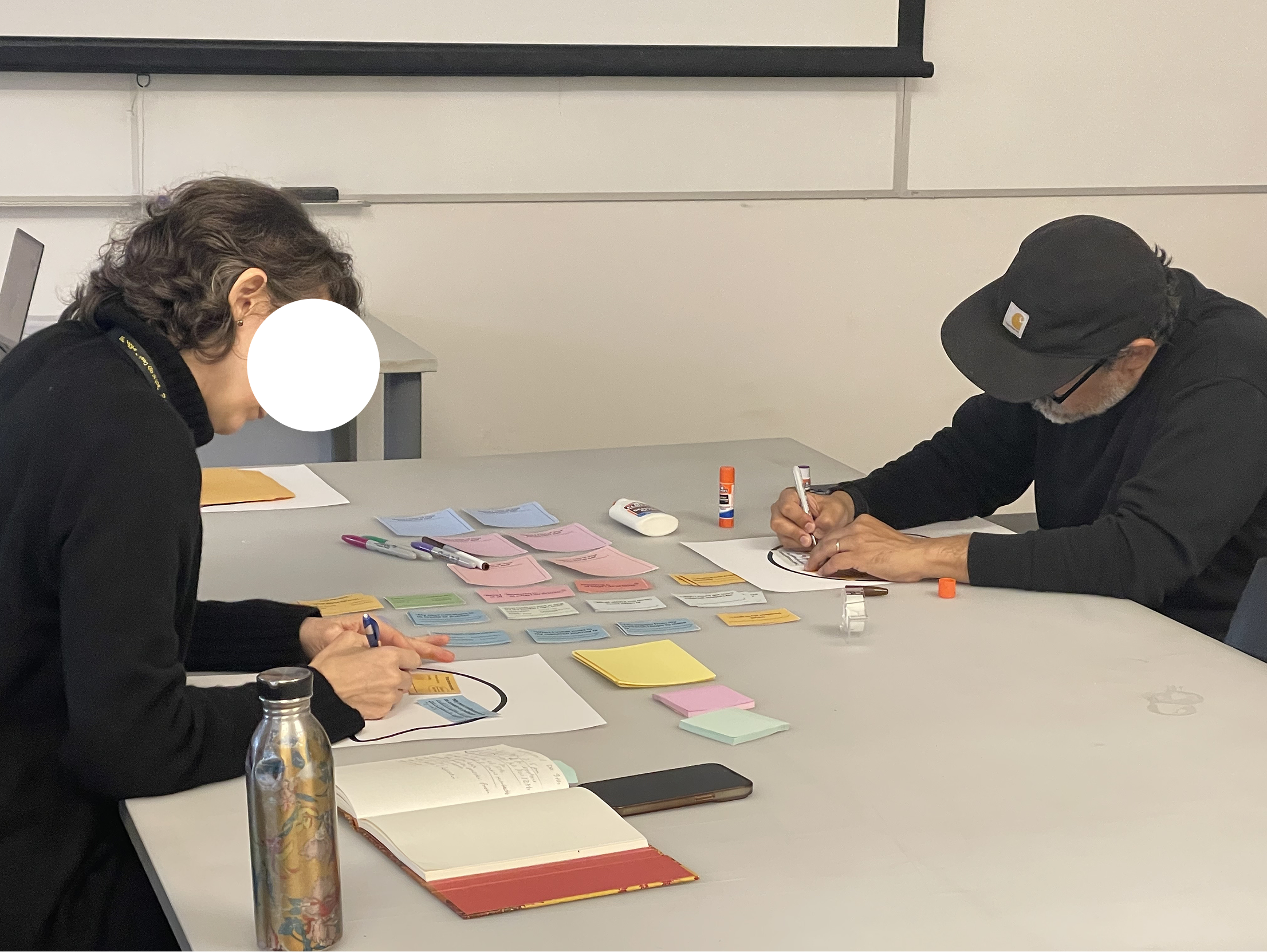
Activity 1 – Research Persona Mapping (25mins)
Goal: Help faculty reflect on and define their identities as researchers.
Process:
- Each participant received a blank template and a set of prompt cards.
- Participants selected, filled, and arranged cards inside their “brain” to visualize their research identity.
- Share and explain their research persona.
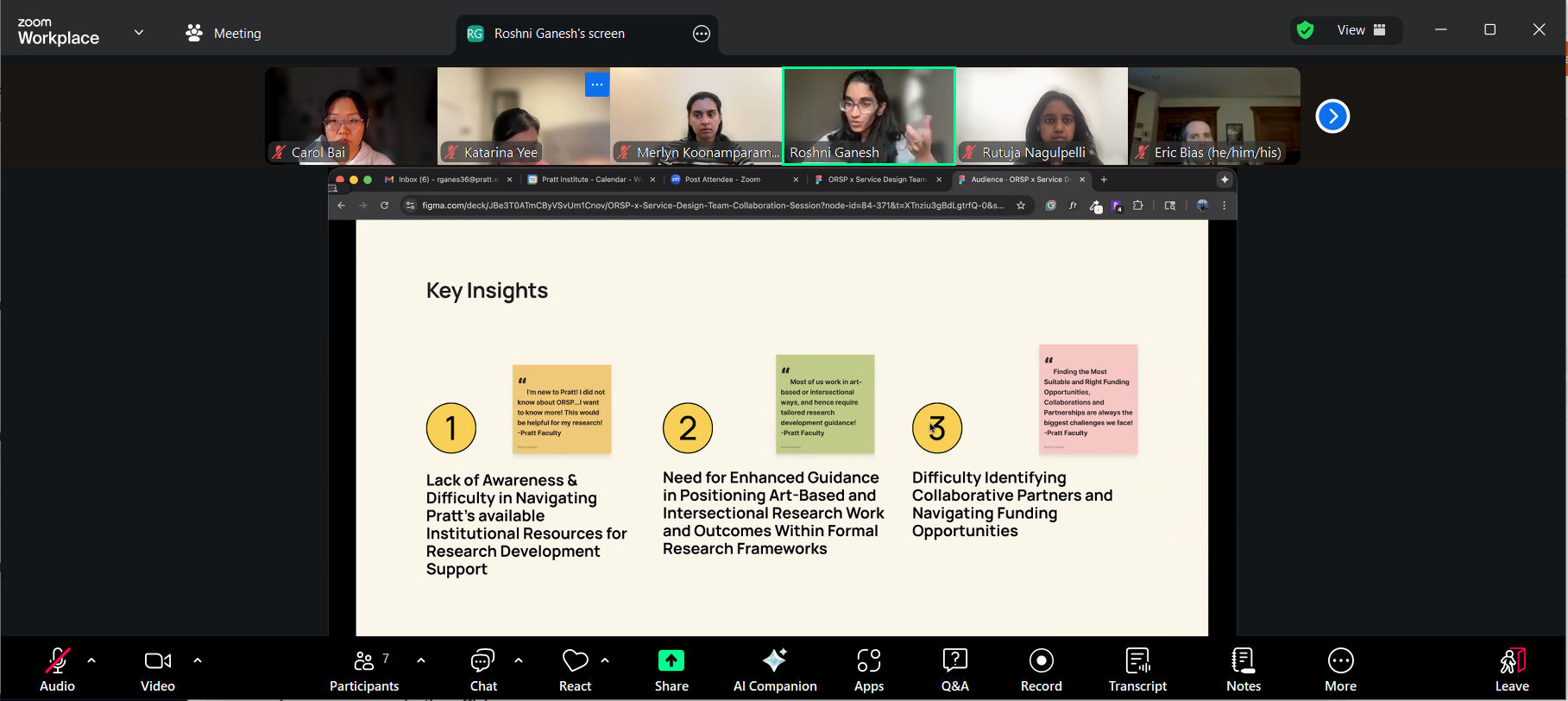
1Lack of Awareness & Difficulty in Navigating Pratt’s available Institutional Resources for
Research Development Support

4Need for more simplified budgeting tools and Enhanced Support for other Administrative Tasks

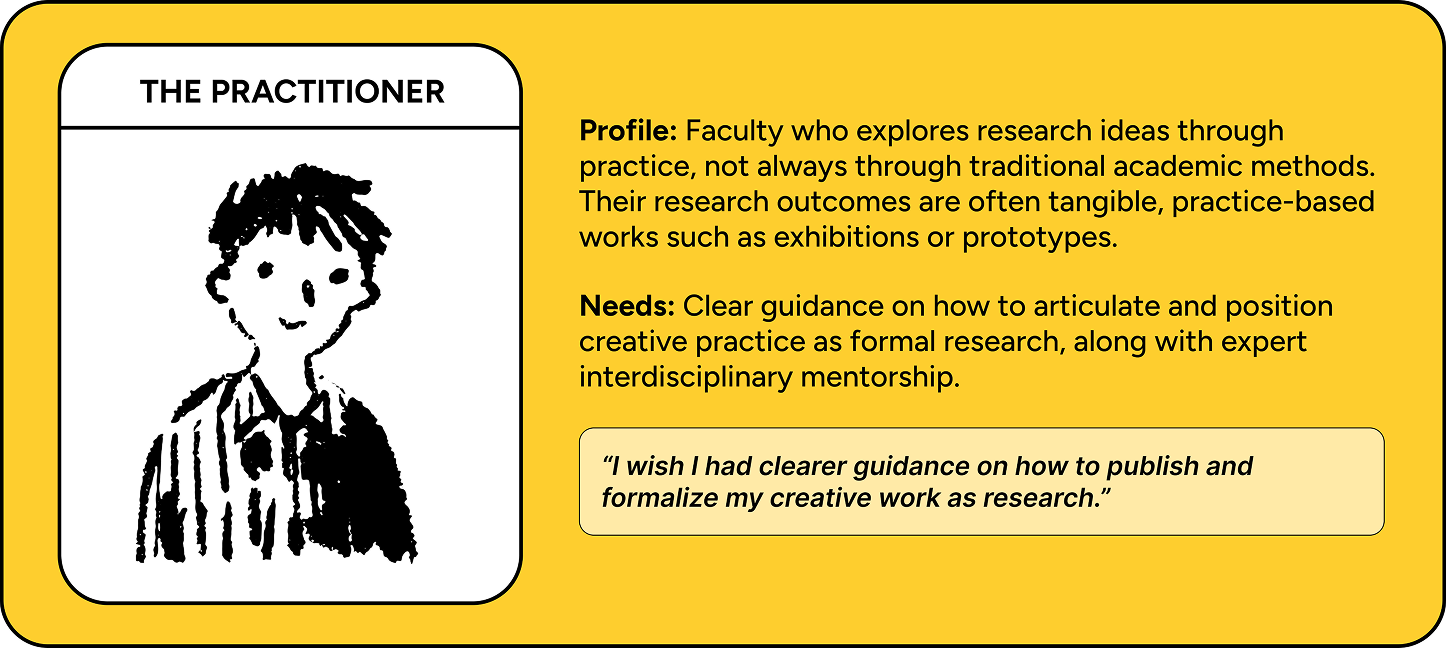
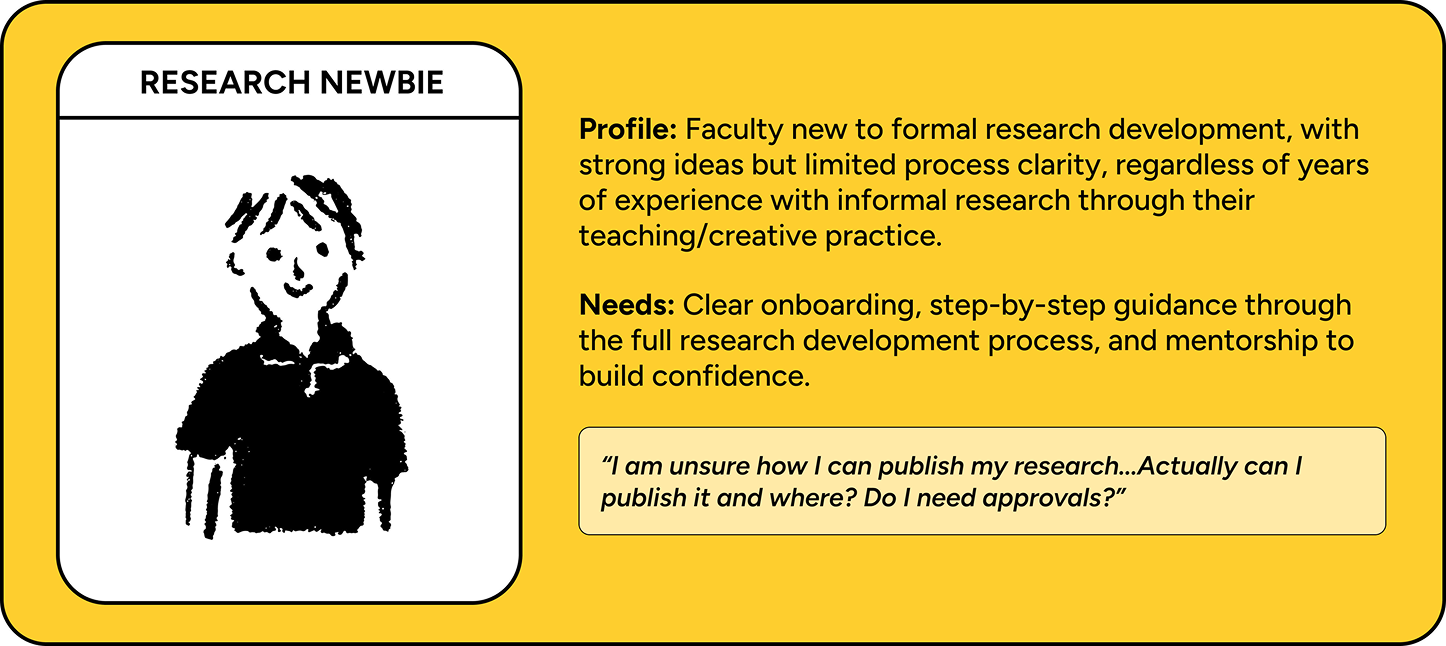
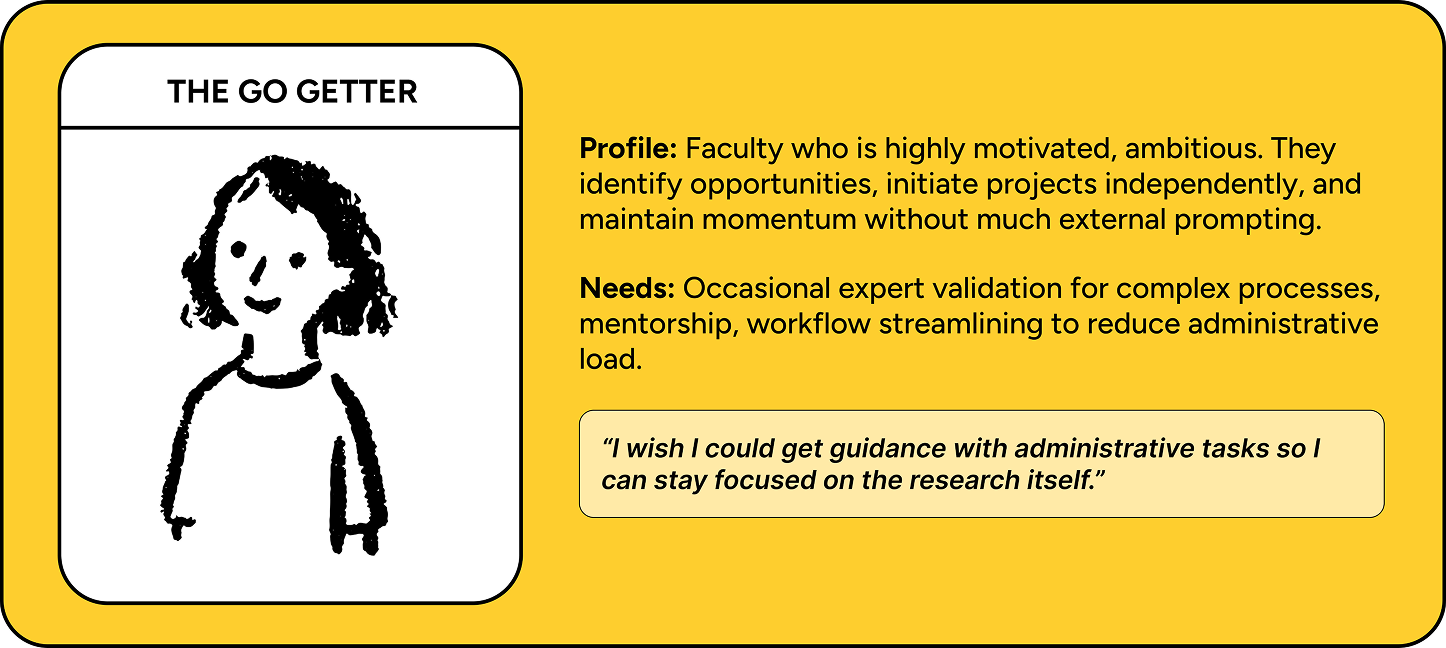
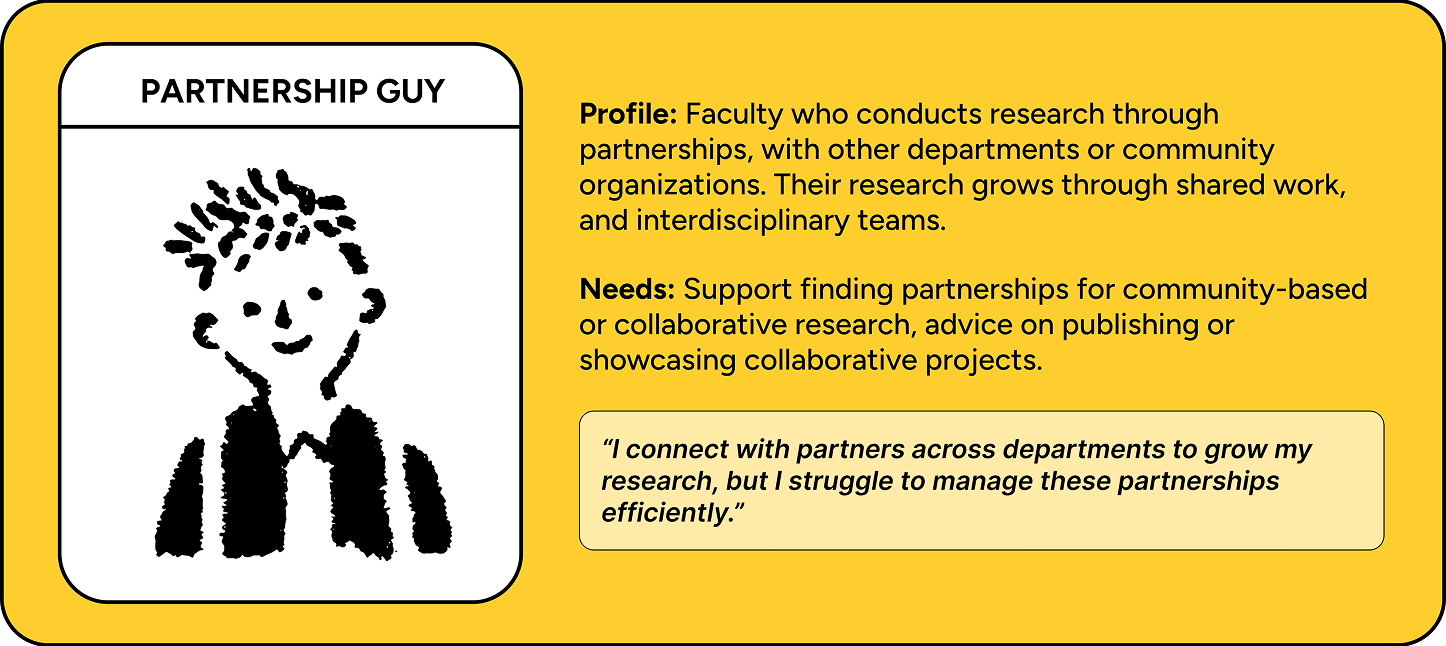
Key Archetypes
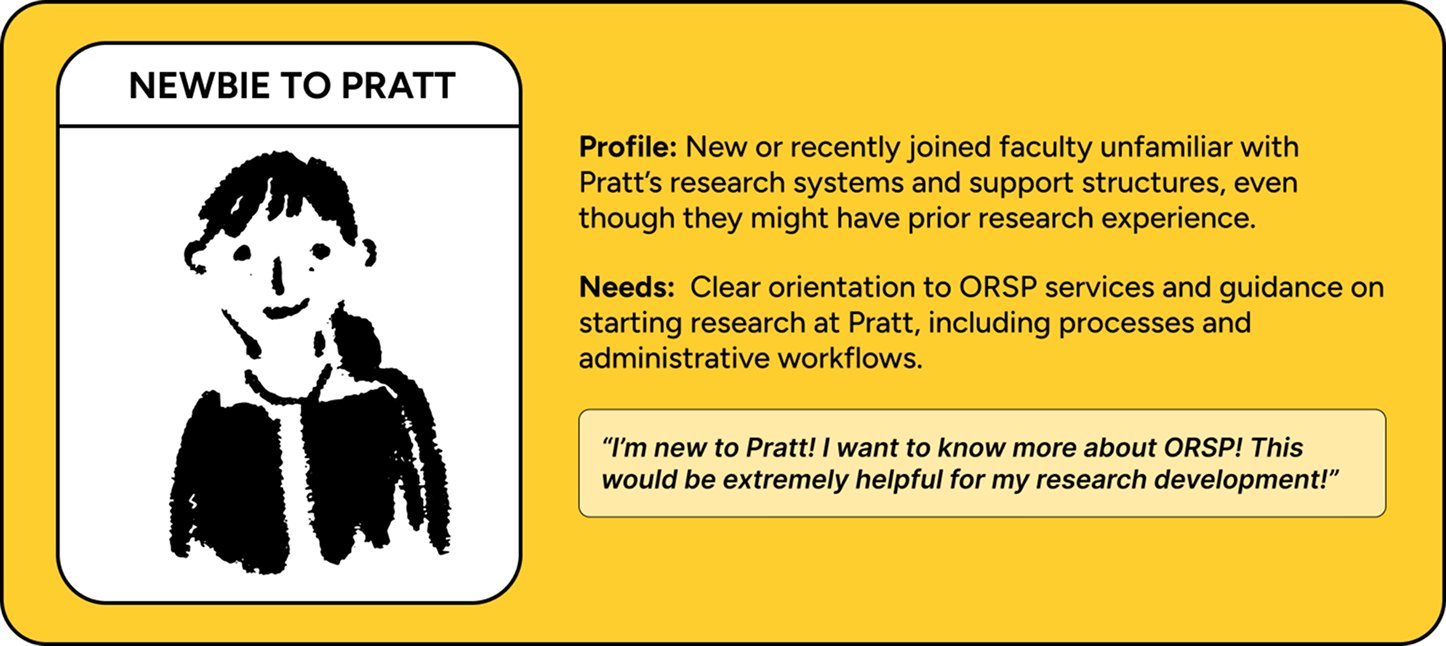
Newbie to Pratt
Research Newbie
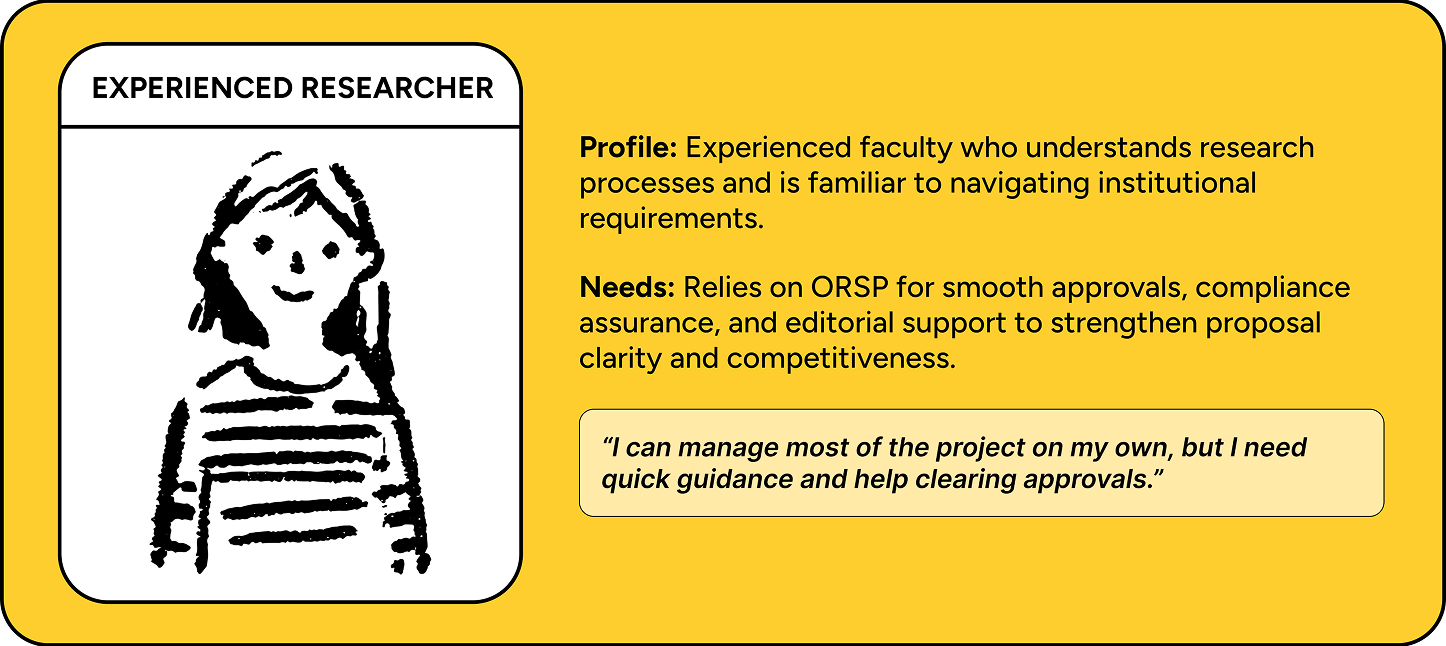
Experienced Researcher
Partnership Guy
The Practitioner
The Go Getter
For Pratt faculty, archetypes reflect the diverse ways educators engage with research. They help inform tailored support and communication by capturing varying levels of familiarity, motivation, and needs from onboarding and guidance to efficiency and administrative support.
How to use these Faculty Archetypes?
Profile: Highlights key characteristics of the faculty type.
Needs: Identifies the targeted support required from ORSP.
Note: Most faculty will not fit into a single archetype. Many reflect a mix of traits, so support and interventions should remain flexible and adaptive.
2Make it easier for faculty to achieve their research goals through ORSP’s procedures and resources
Value-Exchange Ecosystem
Approach: Co-Design Workshops
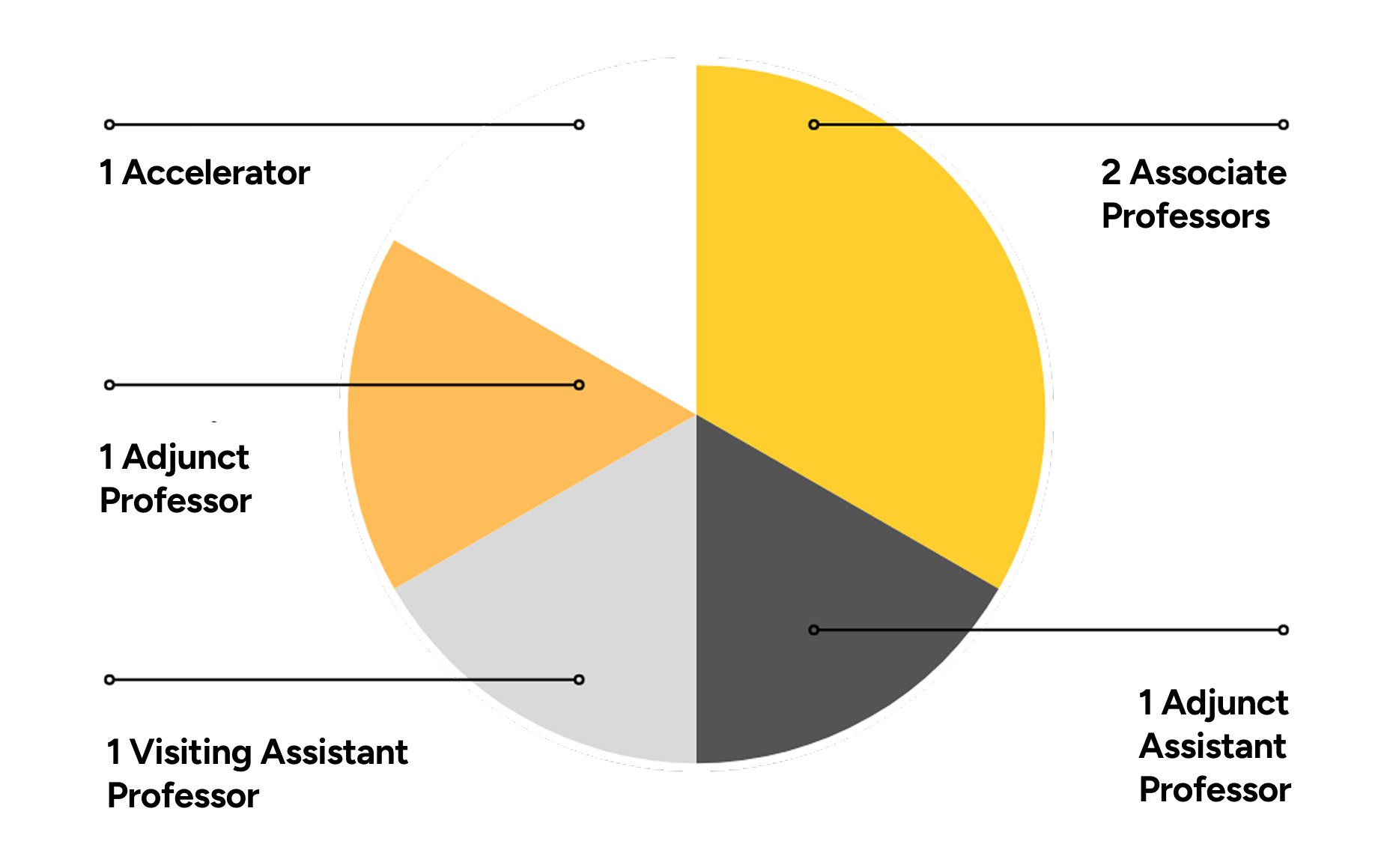
Workshop Activities
Key Insights
2Need for Enhanced Guidance in Positioning Art-Based and Intersectional Research Work and Outcomes Within Formal Research Frameworks
Faculty Archetypes
Proposed Interventions
THEME: VISIBILITY | PRIORITY: HIGHEvent 1: ORSP Resource Fair
D
Drawing from insights generated during the co-design workshops, we collaboratively brainstormed opportunities and recommendations together with faculty to enhance how ORSP communicates with and supports them.
These ideas were shared with the ORSP team in a collaborative session to validate findings and gather targeted feedback. Based on this input, the concepts were reviewed and refined into two final intervention themes, outlined below in order of priority.
Intervention Theme 1: Visibility
Focused on increasing the discoverability of ORSP services, clarity of processes, and resources.
Intervention 1: Getting to know ORSP Better
Workshop Structure


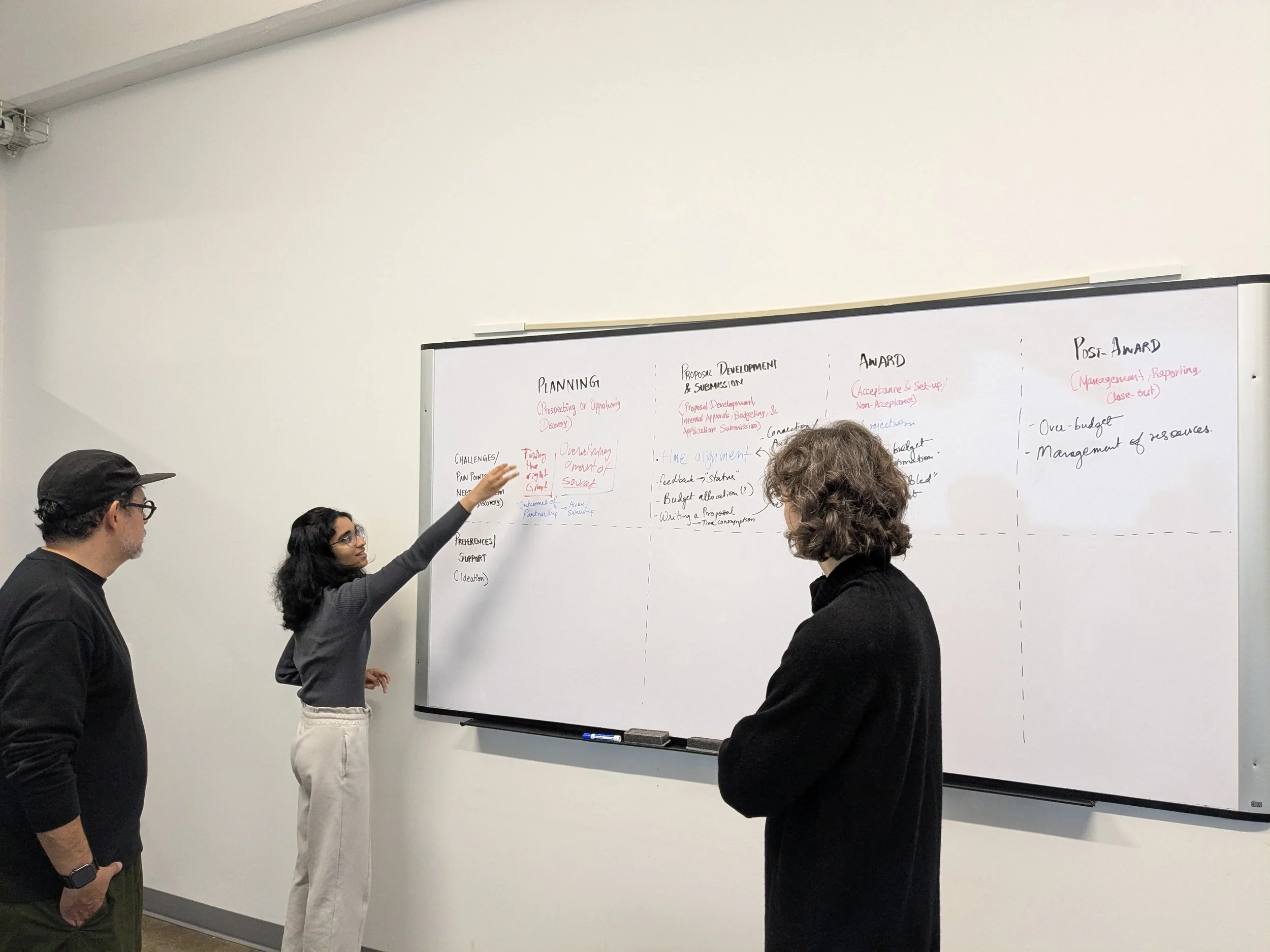
Activity 2 – Research Journey Co-Creation (40 mins)
Goal: Identify needs, challenges during research development, and co-create ideas for leveraging ORSP’s support across different research stages.
Process:
- Participants were guided through a scenario prompt, recalling their experiences working with ORSP.
- Using a journey map template (Planning → Proposal Development → Award → Post-Award), they mapped:
- Challenges / Needs
- Preferences / Support Ideas
- Facilitators encouraged reflection and idea generation for each stage.
3Difficulty Identifying Collaborative Partners and
Navigating Funding Opportunities


Intervention Theme 2: Support Enhancements
Aimed at strengthening guidance, onboarding, and hands-on support for faculty at different stages of the research journey.
Intervention 2: Landing Page Redesign for Easy Information Access
Intervention 3: Regulated Appointment Scheduling & Faster Information Retrieval
THEME: SUPPORT ENHANCEMENTS | PRIORITY: MEDIUMEvent 2: IDC Accelerator Ambassadors - Departmental Research Showcase Series
THEME: SUPPORT ENHANCEMENTS | PRIORITY: HIGHLanding Page Redesign for Easy Information Access
THEME: SUPPORT ENHANCEMENTS | PRIORITY: HIGHAppointment Scheduling System
The Big Picture
THEME: SUPPORT ENHANCEMENTS | PRIORITY: LOWORSP Virtual Assistant
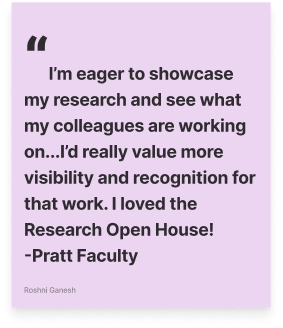
5Desire for stronger institutional recognition, acknowledgement and increased visibility of their research contributions.
Archetypes are representative profiles that capture the common behaviors, goals, needs, and challenges of a specific group of users. They are not real individuals but composites that reveal patterns across multiple faculty members.