From Confusion to Clarity: Designing Better Research Support Communication Systems for Pratt’s Diverse Faculty
A service design project that improves how faculty navigate research processes, supporting faculty success while strengthening institutional research identity and capacity.
⏰ Timeline
Oct’25 - Dec’25 (2 Months)
👥 Team
Roshni Ganesh
Carol Bai
Merlyn Koonamparampath
Rutuja Nagulpelli
👩🏽💻 My Role
Service Designer
Overview
This service design project enhances how faculty engage with the Office of Research and Strategic Partnerships (ORSP) at Pratt Institute.
Grounded in systems thinking and participatory design, it focuses on improving communication from ORSP to faculty.
While ORSP plays a key role in enabling research, partnerships, and funding opportunities across the institute, its processes, especially around project development, were fragmented, difficult to navigate, and inconsistently communicated.
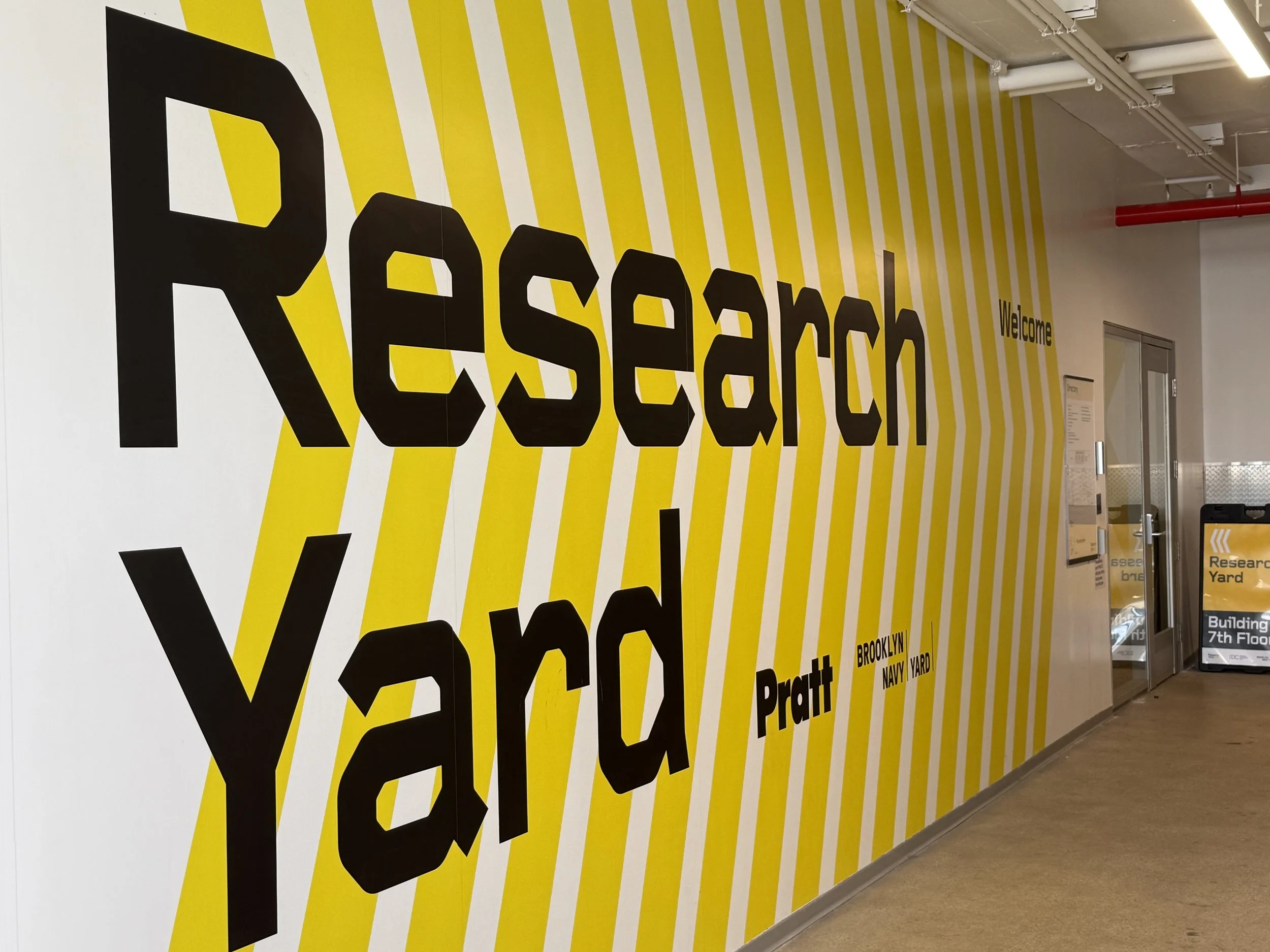
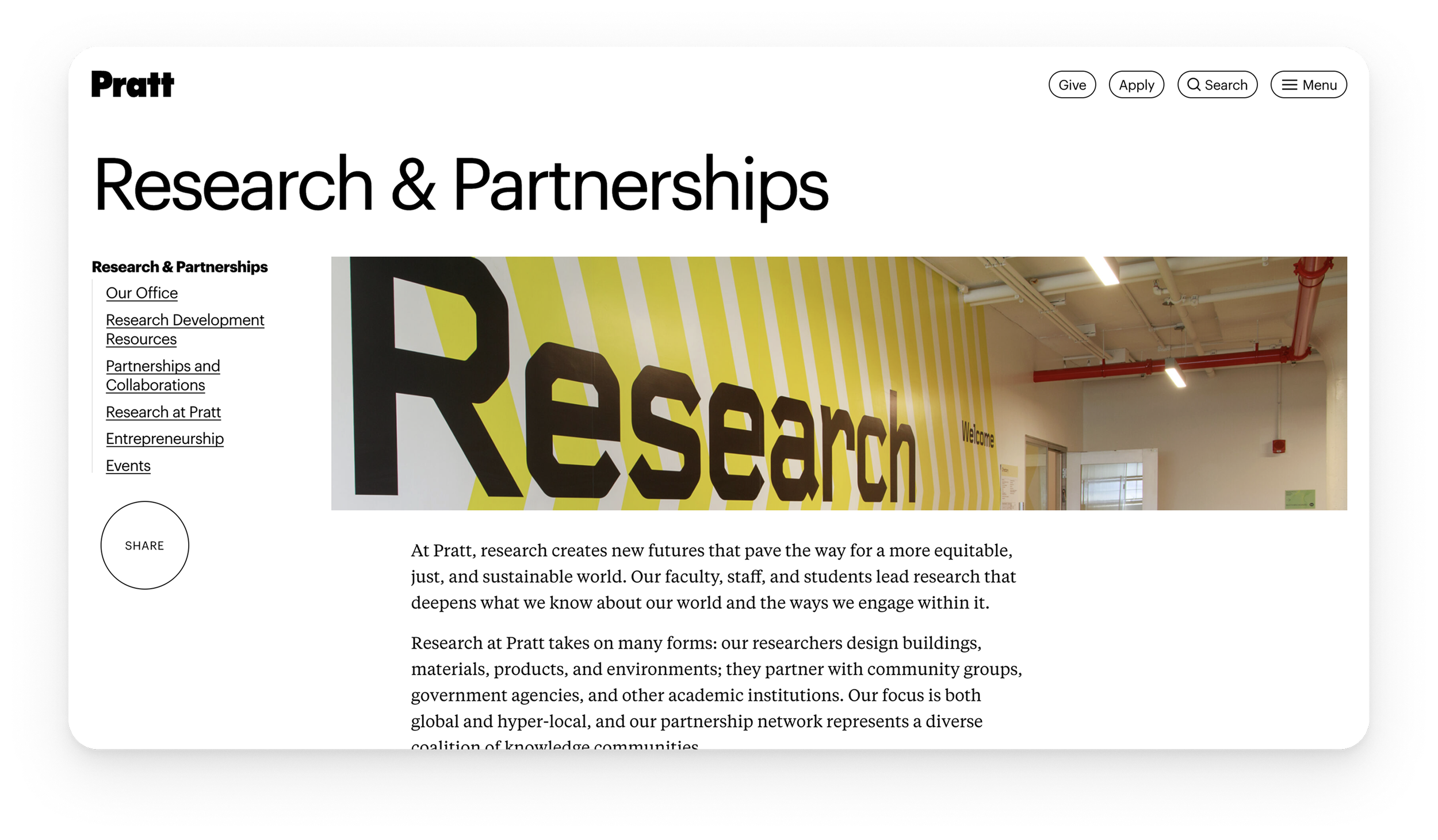
Image Credits: Pratt ORSP Website
Approach
Service Safaris: Attended ORSP events and touchpoints to observe service delivery and faculty interactions in real-world contexts
Stakeholder Interviews & Shadowing: Engaged with ORSP team members and observed day-to-day workflows to understand processes, challenges, and communication flows
Co-Design Workshops: Collaborated with faculty to identify needs, map challenges, and co-create ideas to improve research support and communication
Project Goals
1Improve communication from ORSP to faculty by defining the order of events
2Make it easier for faculty to achieve their research goals through ORSP’s procedures and resources
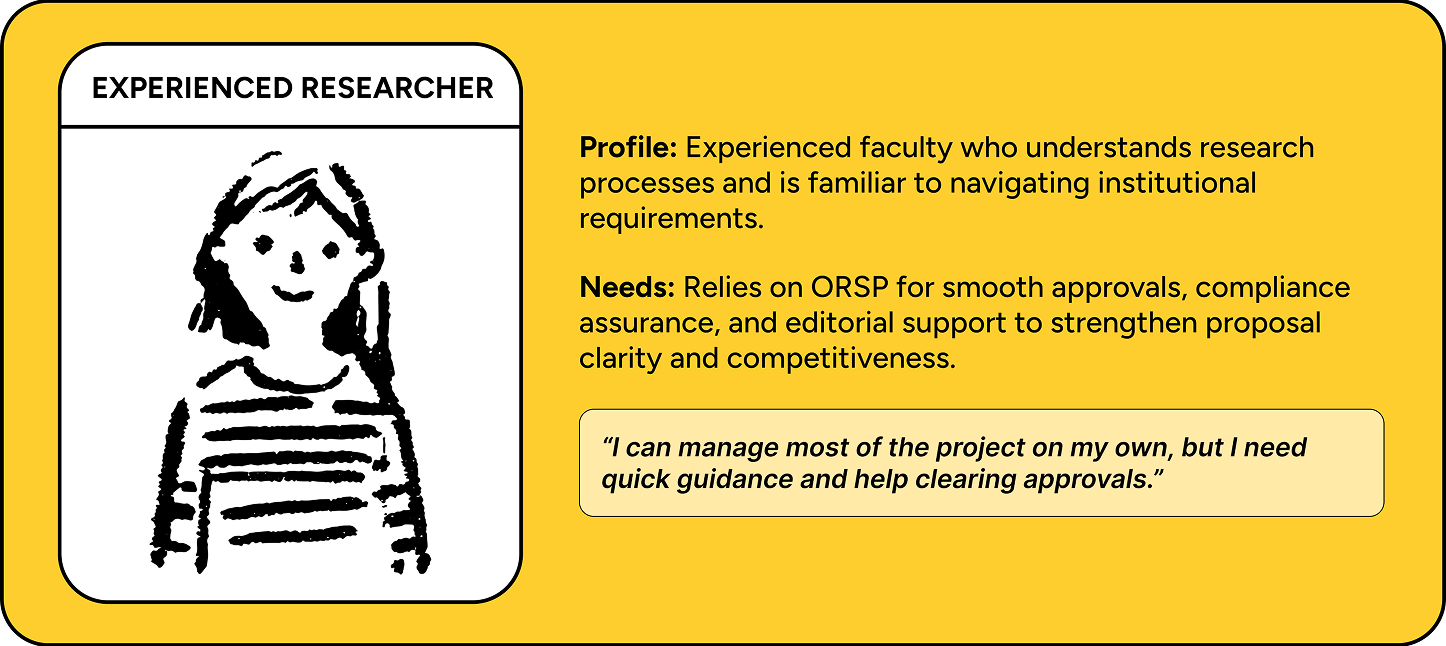
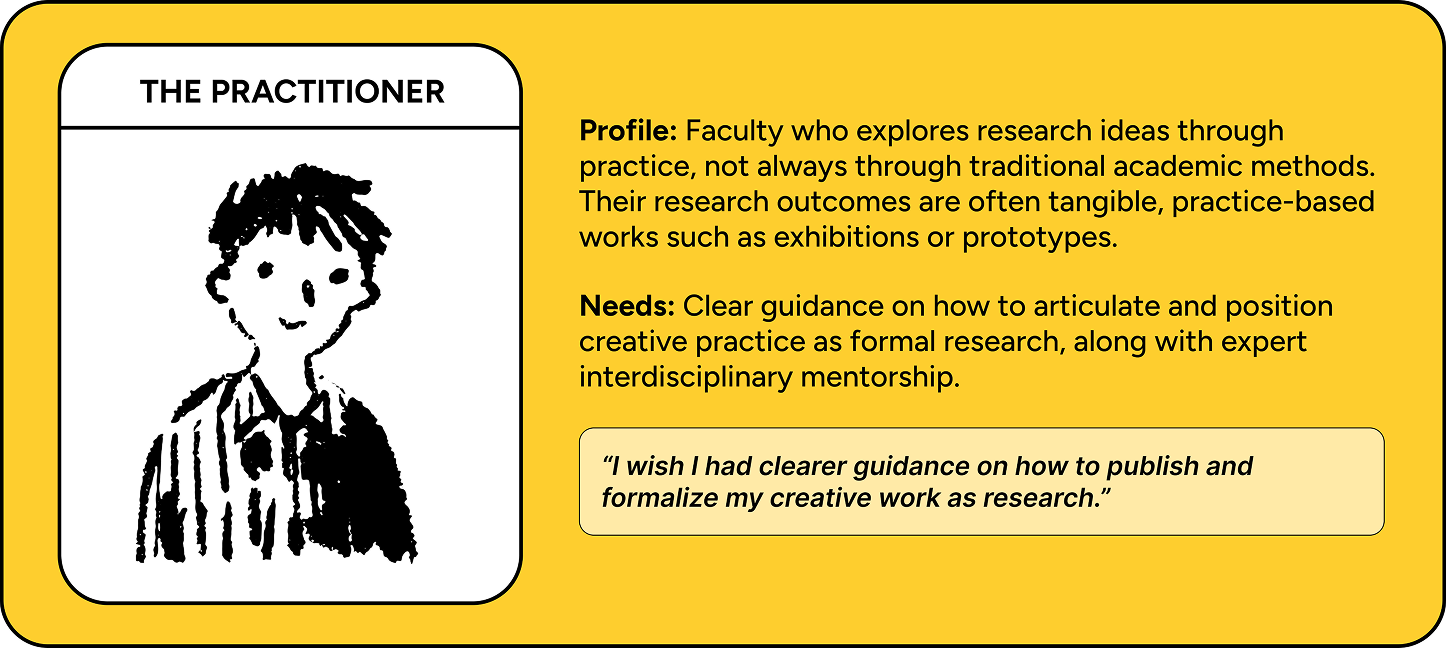
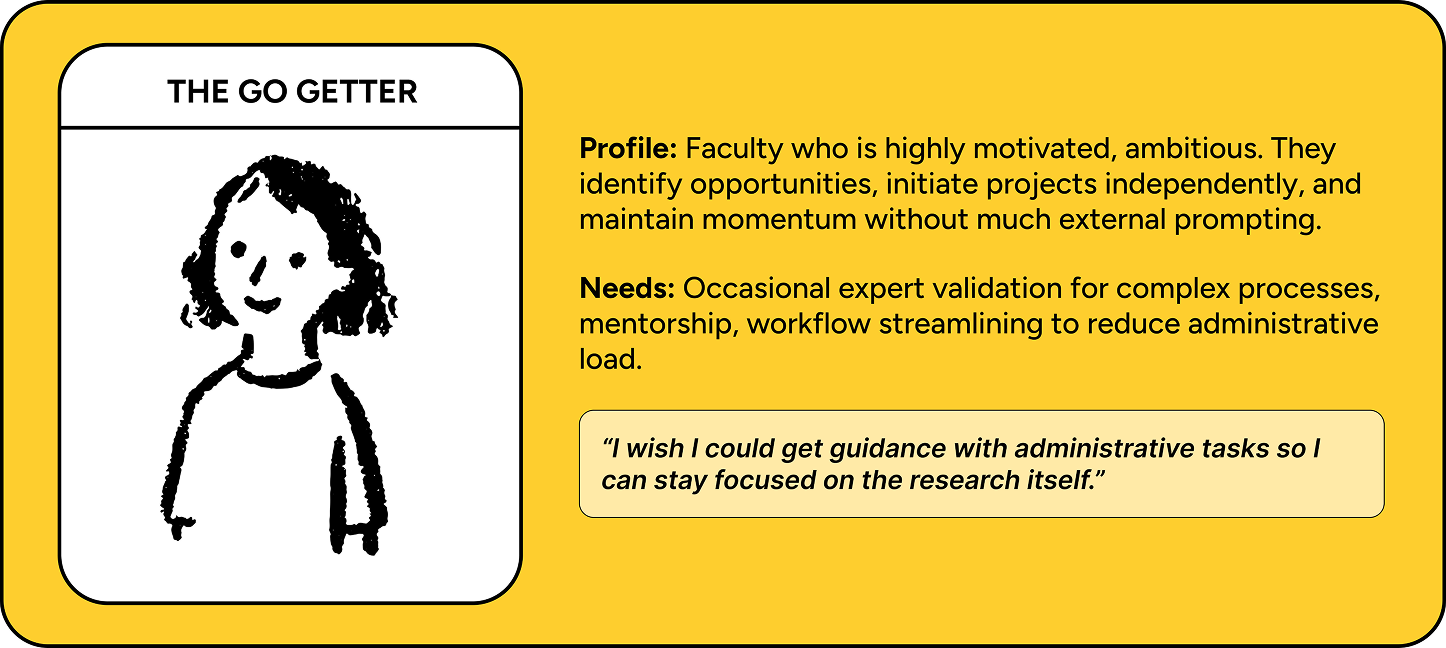
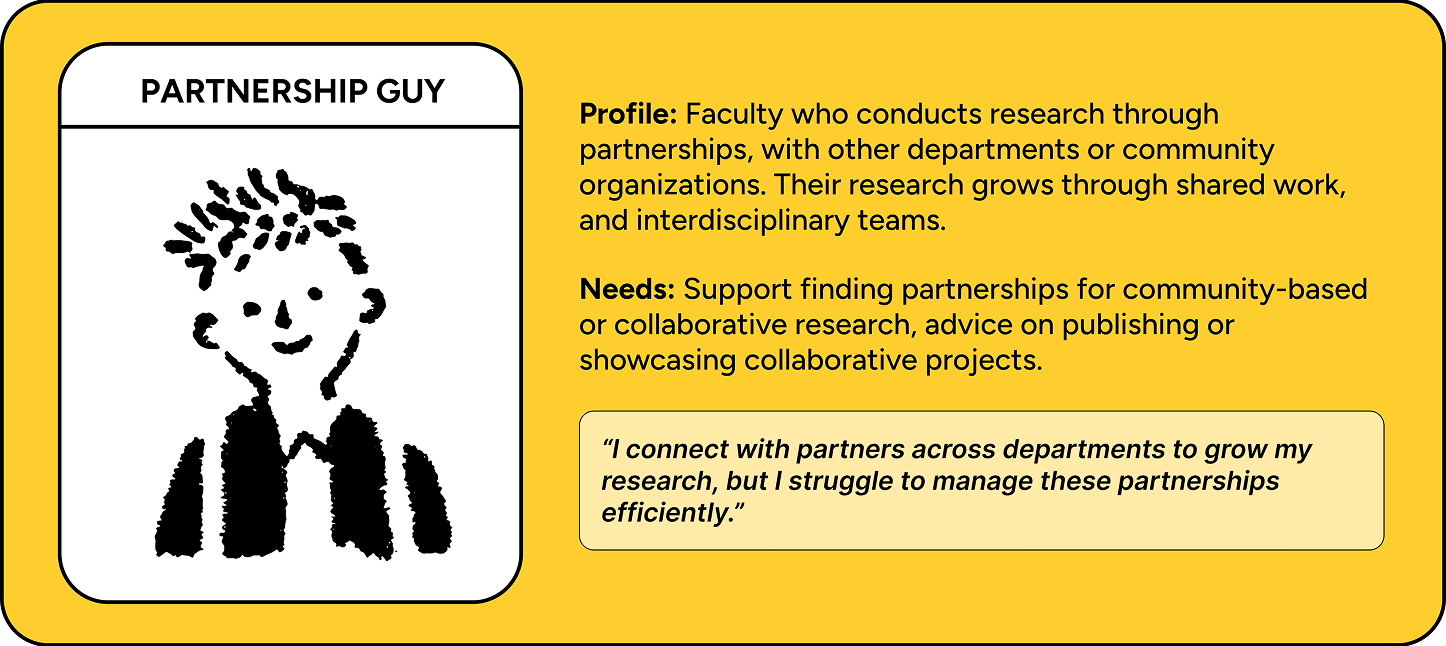
3Define archetypes and how to use them to improve support for diverse Pratt faculty
Value-Exchange Ecosystem
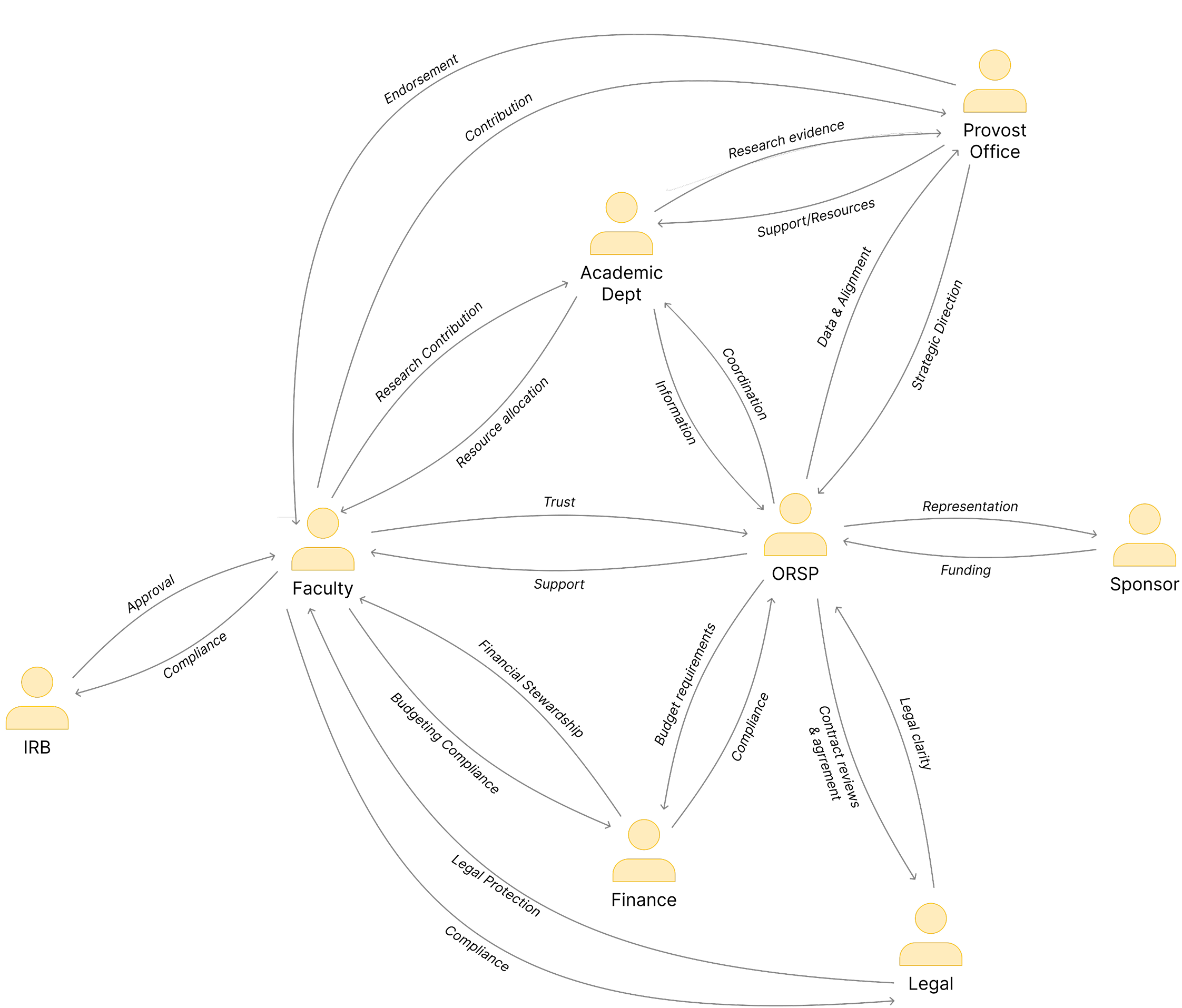
Pratt’s research ecosystem is driven by continuous value exchange between faculty, ORSP, and institutional partners, where each actor contributes and receives what is needed to move research forward.
Faculty contribute intellectual capital, innovation, and institutional prestige.
ORSP translates that innovation into fundable, compliant, and visible outcomes by coordinating the broader institutional ecosystem.
Institutional units (IRB, Finance, Legal, Academic Departments, and the Provost Office) provide the policies, approvals, compliance, and resources that make research possible, relying on ORSP to translate and manage these processes.
Together, these exchanges form a self-sustaining research ecosystem where value flows in multiple directions, supporting faculty success while strengthening institutional research capacity.
Co-Design Workshops
Co-design is a participatory design approach where the people who are directly impacted by a service become active partners in the design process, rather than passive subjects being studied.
In this case, Pratt faculty actively participated in shaping how communication between ORSP and faculty can be improved.
Instead of designing for them, we design with them.
Co-design Goals
1Understand how faculty define their research personalities at Pratt
2Identify the challenges and needs at each stage of research development
3Co-create ideas for a better communication experience with ORSP
Workshop Structure

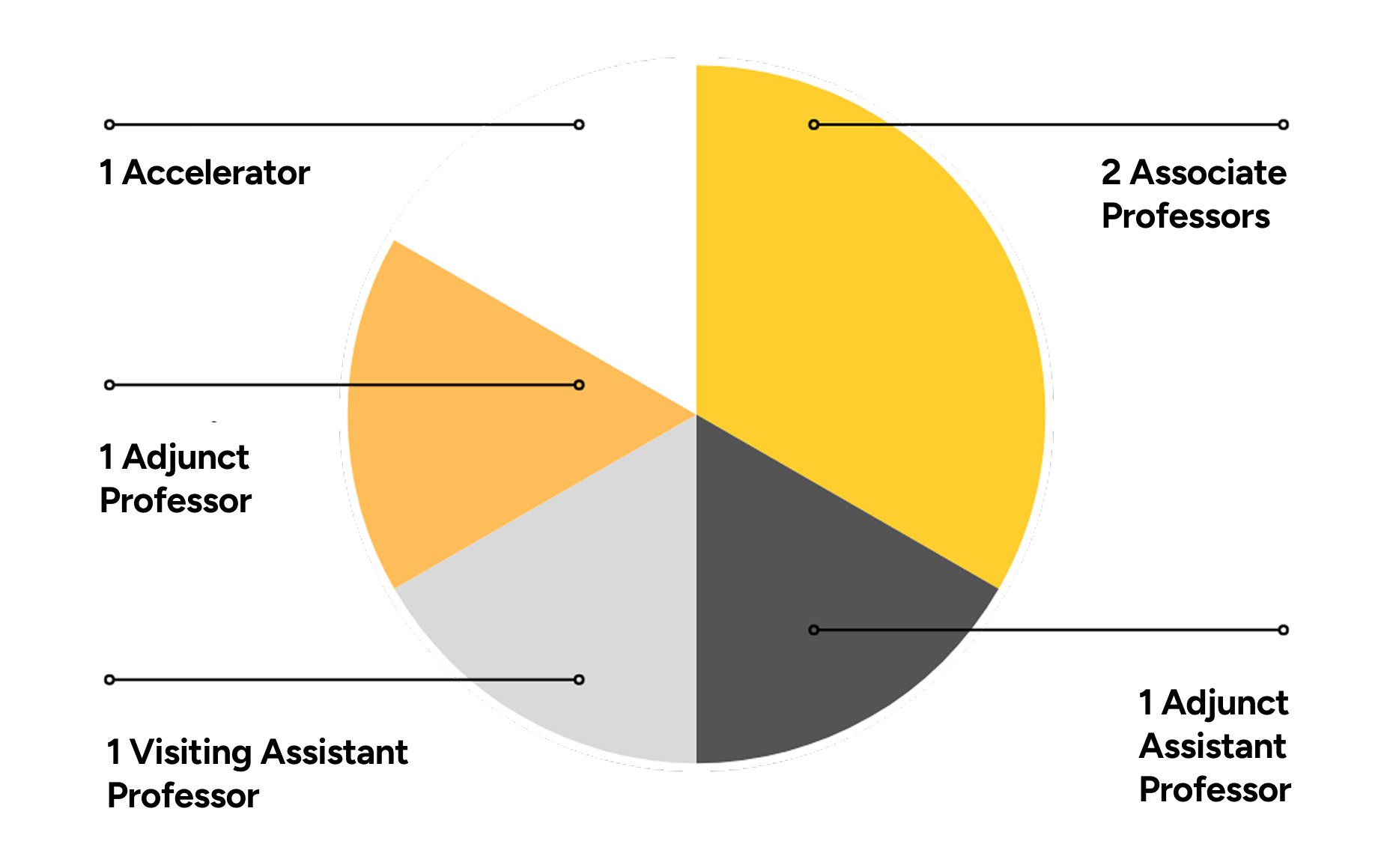
Workshop Activities
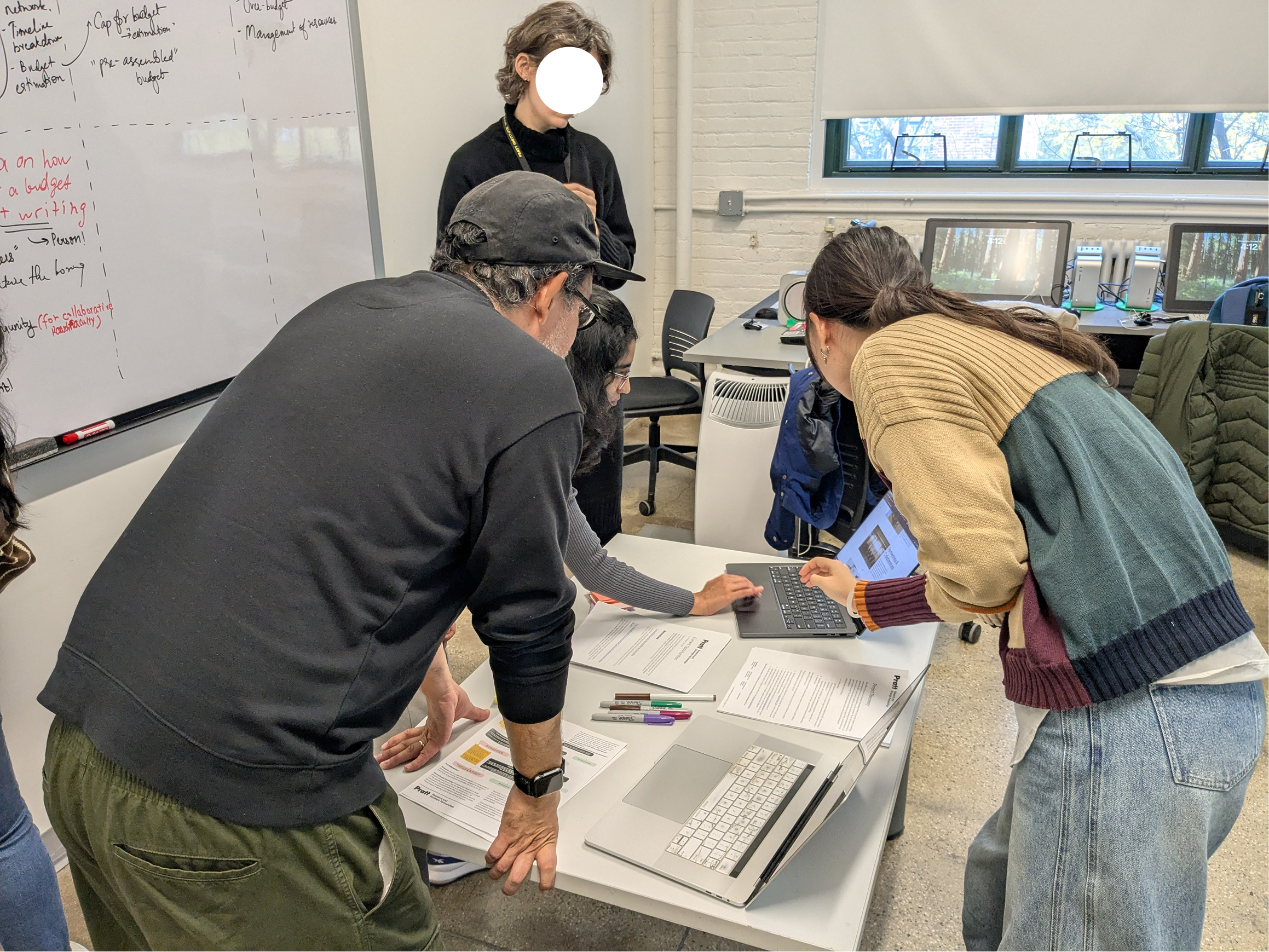
Activity 1 – Research Persona Mapping (25mins)
Goal: Help faculty reflect on and define their identities as researchers.
Process:
- Each participant received a blank template and a set of prompt cards.
- Participants selected, filled, and arranged cards inside their “brain” to visualize their research identity.
- Share and explain their research persona.
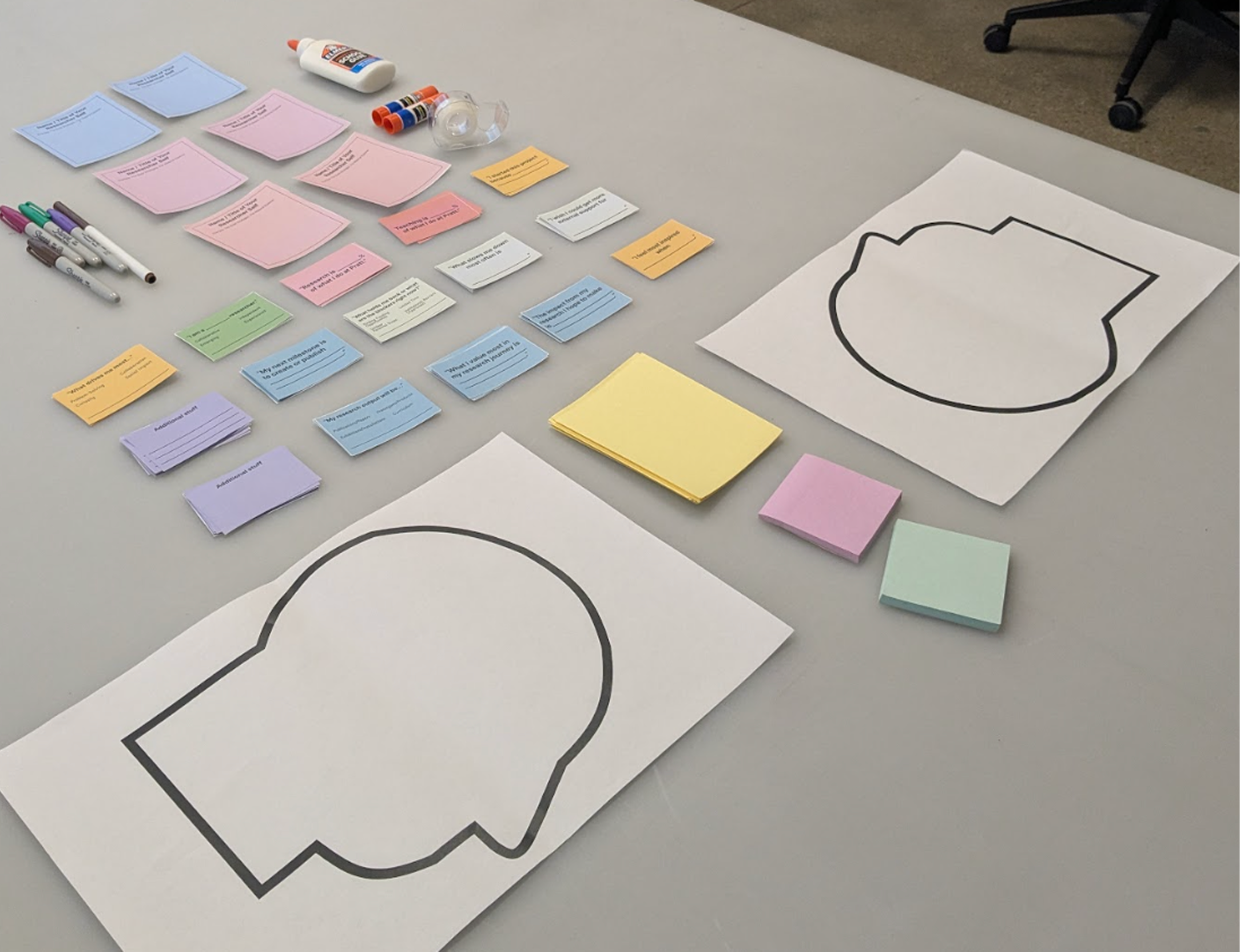
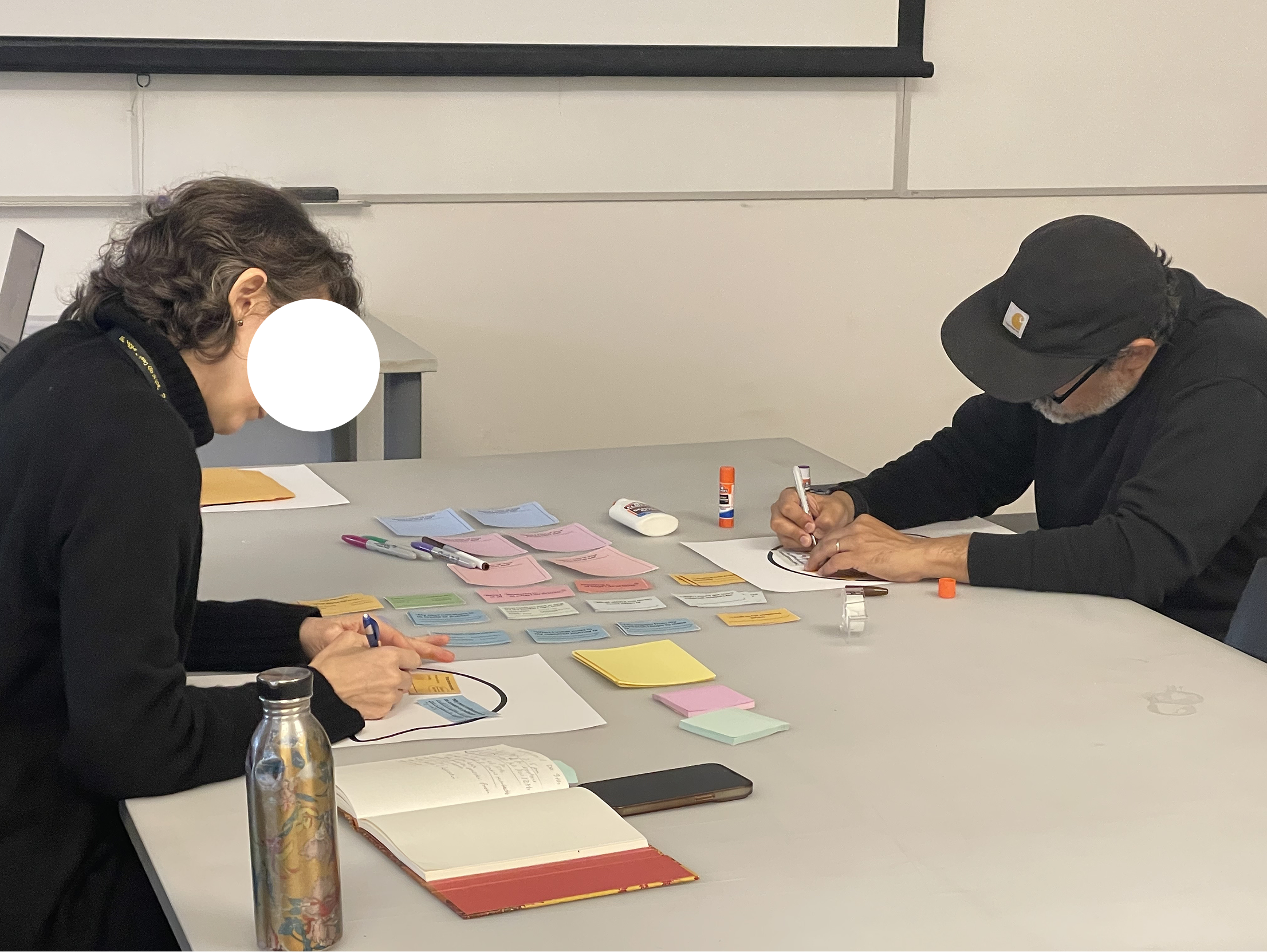
Activity 2 – Research Journey Co-Creation (40 mins)
Goal: Identify needs, challenges during research development, and co-create ideas for leveraging ORSP’s support across different research stages.
Process:
- Participants were guided through a scenario prompt, recalling their experiences working with ORSP.
- Using a journey map template (Planning → Proposal Development → Award → Post-Award), they mapped:
- Challenges / Needs
- Preferences / Support Ideas
- Facilitators encouraged reflection and idea generation for each stage.
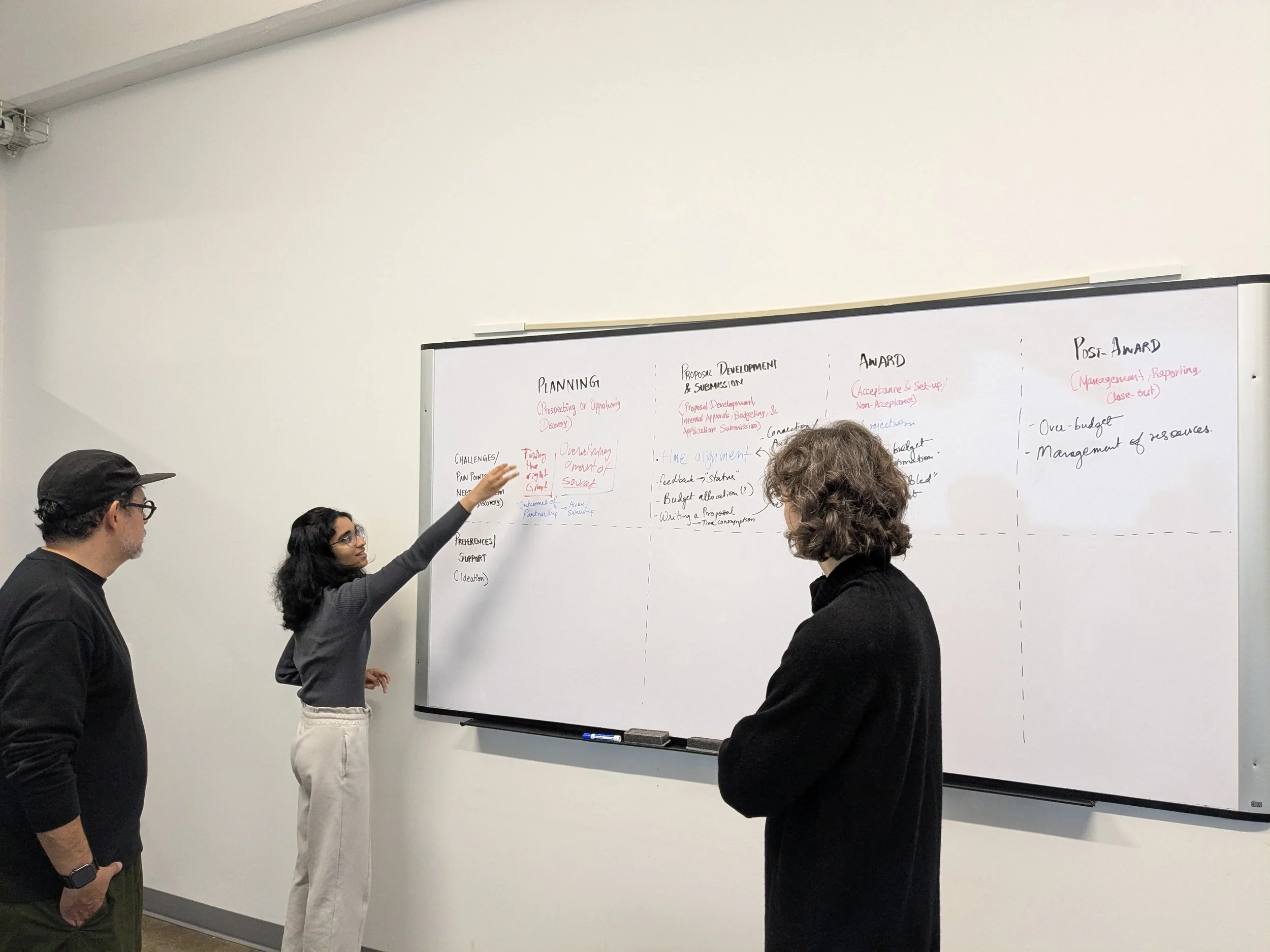
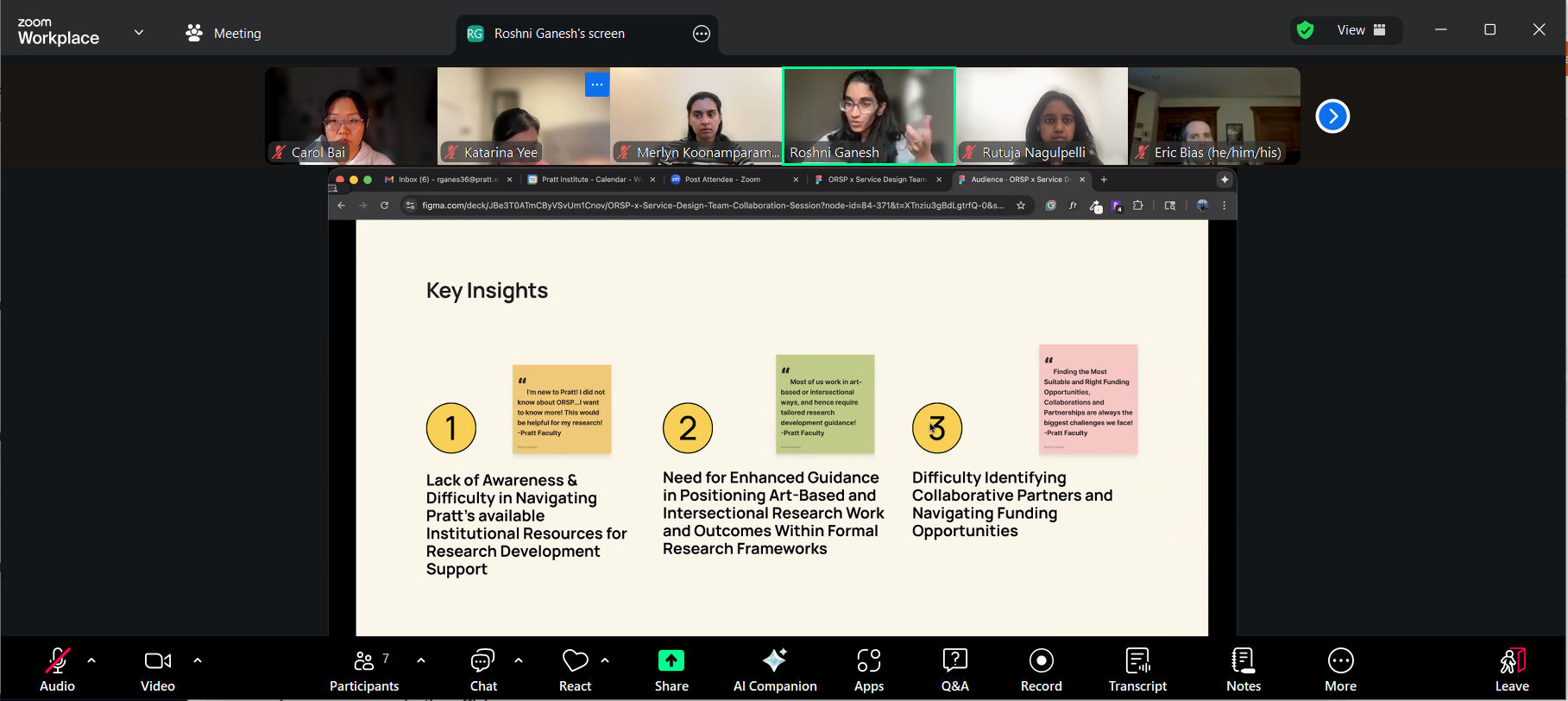
Key Insights
1Lack of Awareness & Difficulty in Navigating Pratt’s available Institutional Resources for
Research Development Support

2Need for Enhanced Guidance in Positioning Art-Based and Intersectional Research Work and Outcomes Within Formal Research Frameworks

3Difficulty Identifying Collaborative Partners and Navigating Funding Opportunities

4Need for more simplified budgeting tools and Enhanced Support for other Administrative Tasks

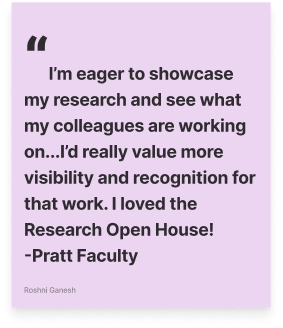
5Desire for stronger institutional recognition, acknowledgement and increased visibility of their research contributions.

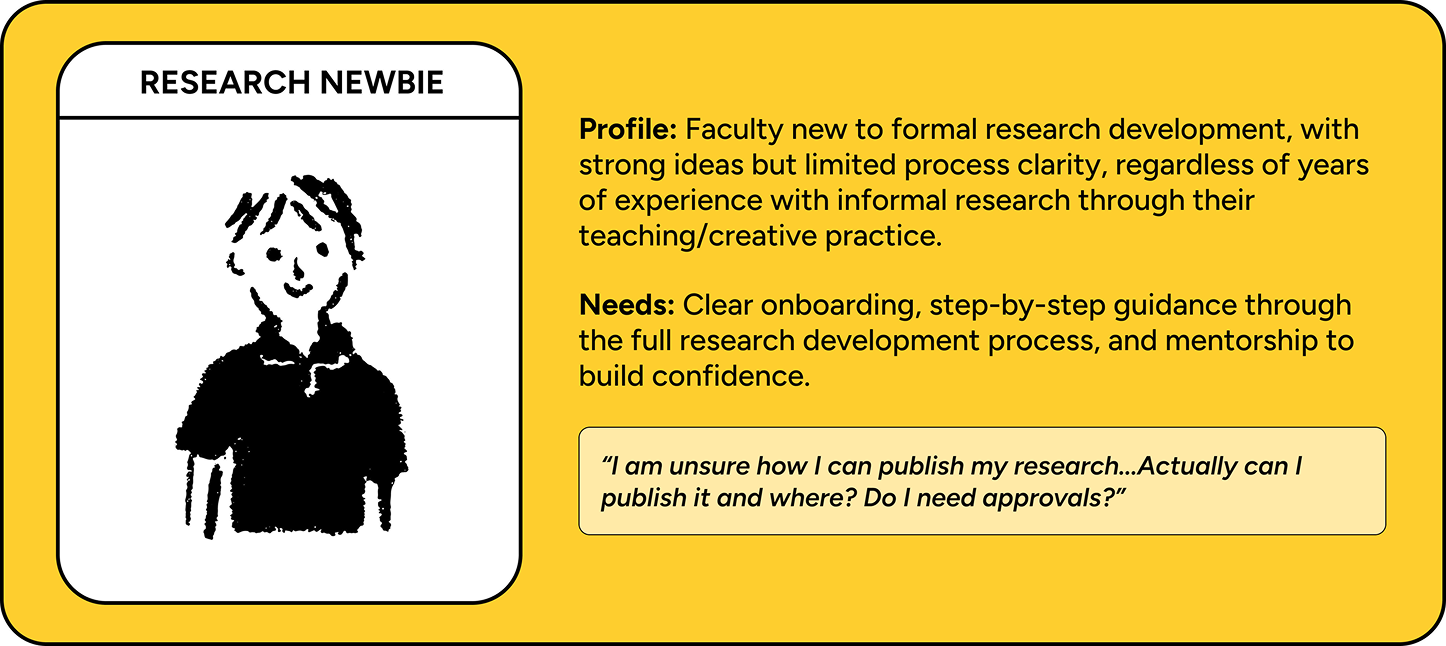
Faculty Archetypes
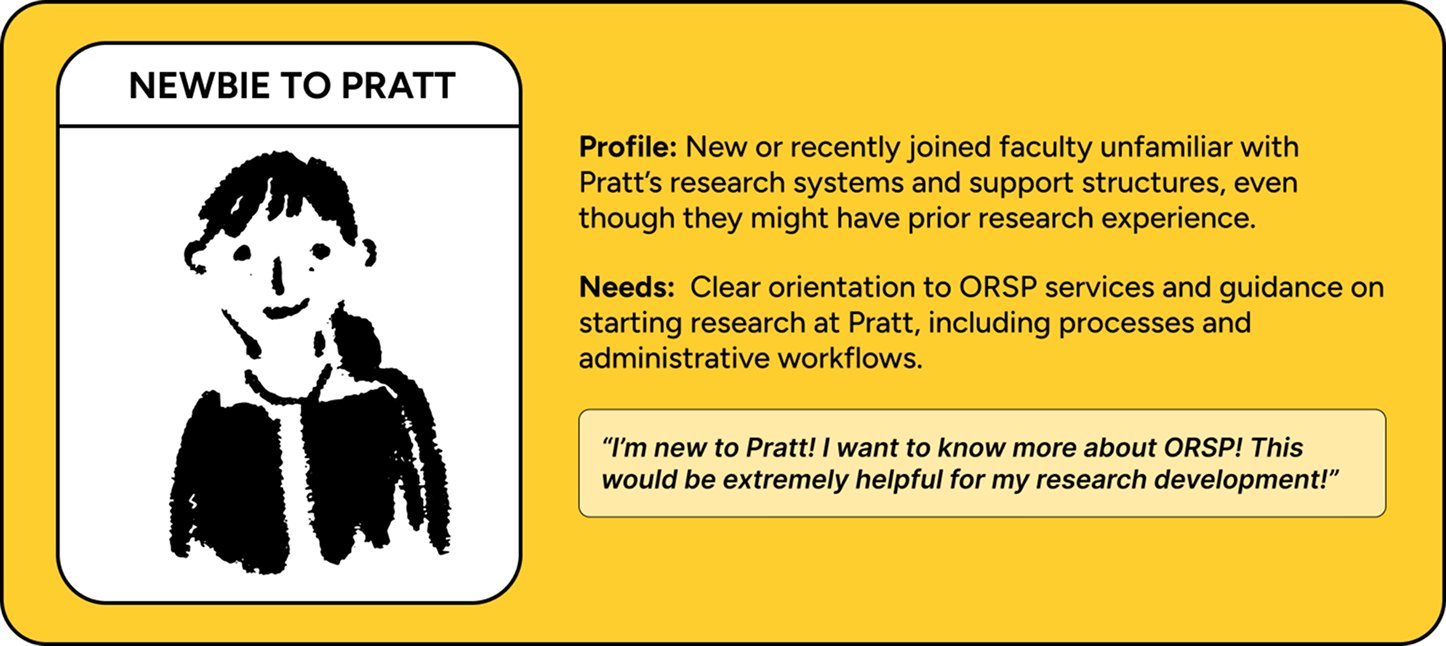
Archetypes are representative profiles that capture the common behaviors, goals, needs, and challenges of a specific group of users. They are not real individuals but composites that reveal patterns across multiple faculty members.
Proposed Interventions
Drawing from insights generated during the co-design workshops, we collaboratively brainstormed opportunities and recommendations together with faculty to enhance how ORSP communicates with and supports them.
These ideas were shared with the ORSP team in a collaborative session to validate findings and gather targeted feedback. Based on this input, the concepts were reviewed and refined into two final intervention themes, outlined below in order of priority.
Intervention Theme 1: Visibility
Focused on increasing the discoverability of ORSP services, clarity of processes, and resources.
Intervention 1: Getting to know ORSP Better
Intervention Theme 2: Support Enhancements
Aimed at strengthening guidance, onboarding, and hands-on support for faculty at different stages of the research journey.
Intervention 2: Landing Page Redesign for Easy Information Access
Intervention 3: Regulated Appointment Scheduling & Faster Information Retrieval
Intervention 4: Strengthening ORSP Capacity for Art-Based & Intersectional Research
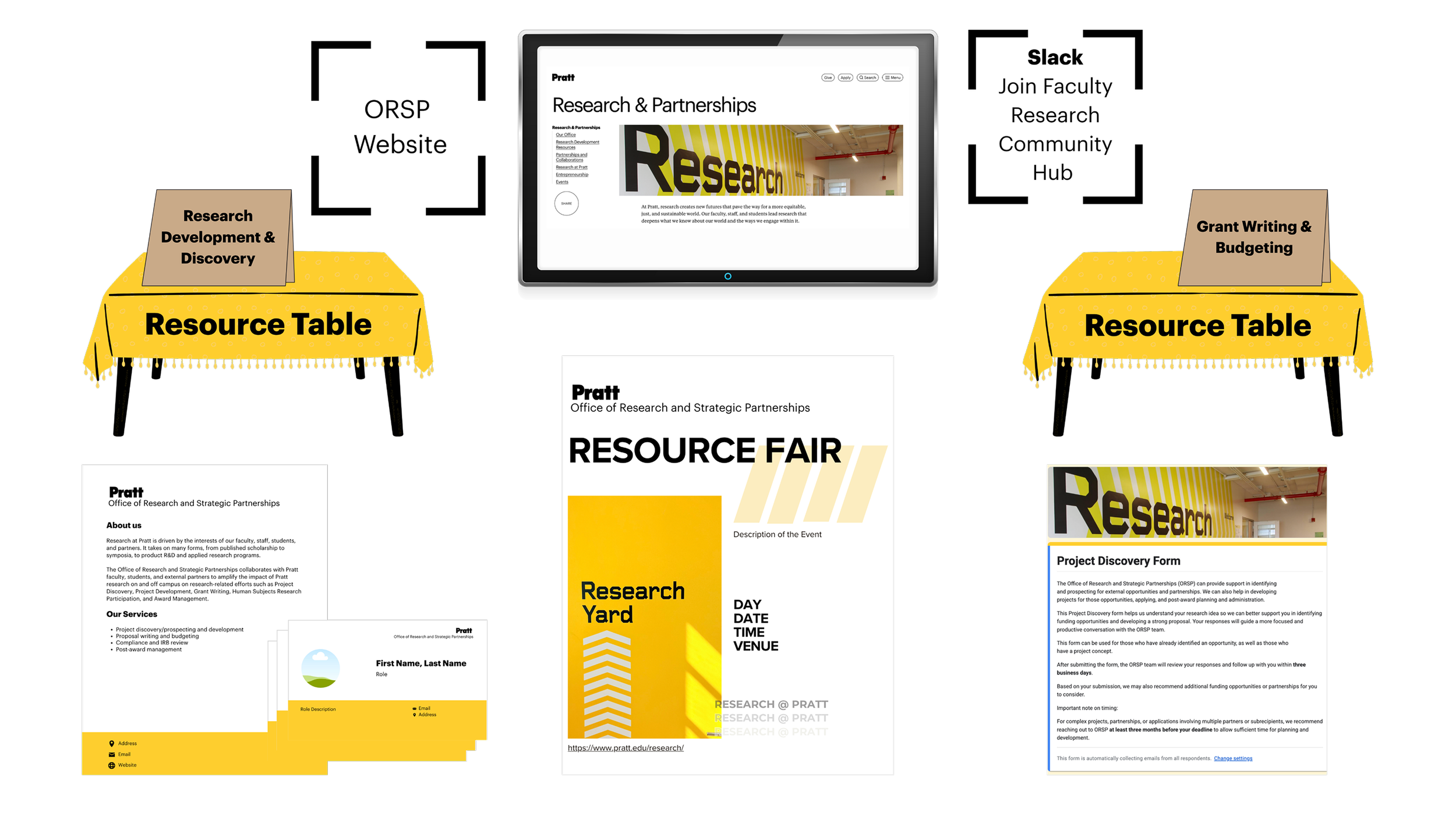
THEME: VISIBILITY | PRIORITY: HIGHEvent 1: ORSP Resource Fair
A semesterly institute-wide resource fair-style event to increase faculty awareness and understanding of ORSP’s research support services.
Builds faculty understanding of ORSP offerings
Creates space for conversations and support
Enables networking and community-building
Helps ORSP understand diverse research practices
THEME: SUPPORT ENHANCEMENTS | PRIORITY: MEDIUMEvent 2: IDC Accelerator Ambassadors - Departmental Research Showcase Series
A recurring or annual Research Showcase hosted within each department, where IDC Accelerator alumni present their research journey and outcomes.
Recognizes research achievements of Accelerator Hub Faculty
Encourages departments to share ongoing work
Builds visibility for ORSP’s role
Fosters collaboration and mentorship
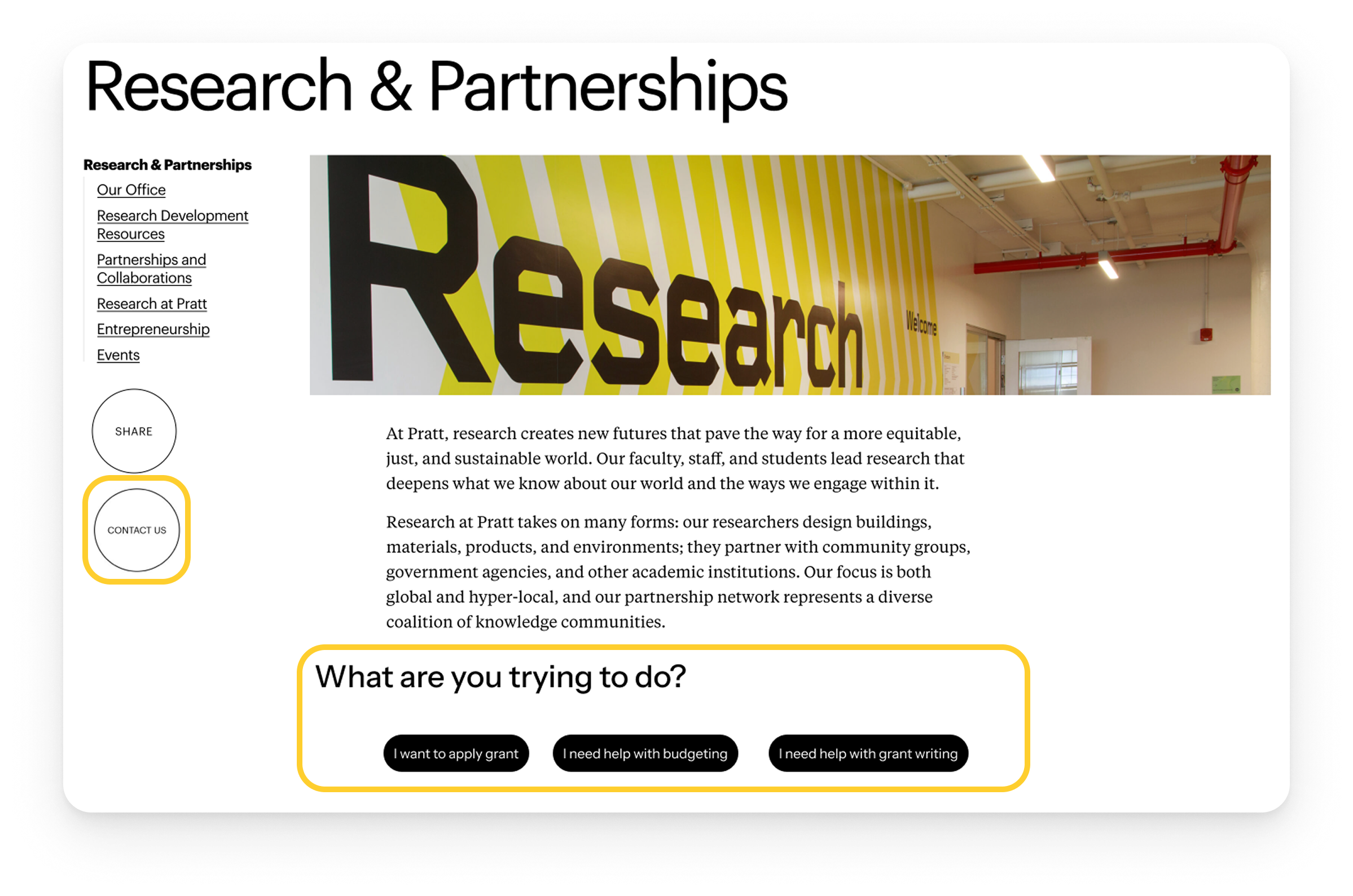
THEME: SUPPORT ENHANCEMENTS | PRIORITY: HIGHLanding Page Redesign for Easy Information Access
An onboarding hub that helps faculty quickly understand and navigate ORSP resources based on their goals and research stage.
Key Features:
Prominent CTA buttons
Clear information scan-ability
Personalized experience for different faculty types
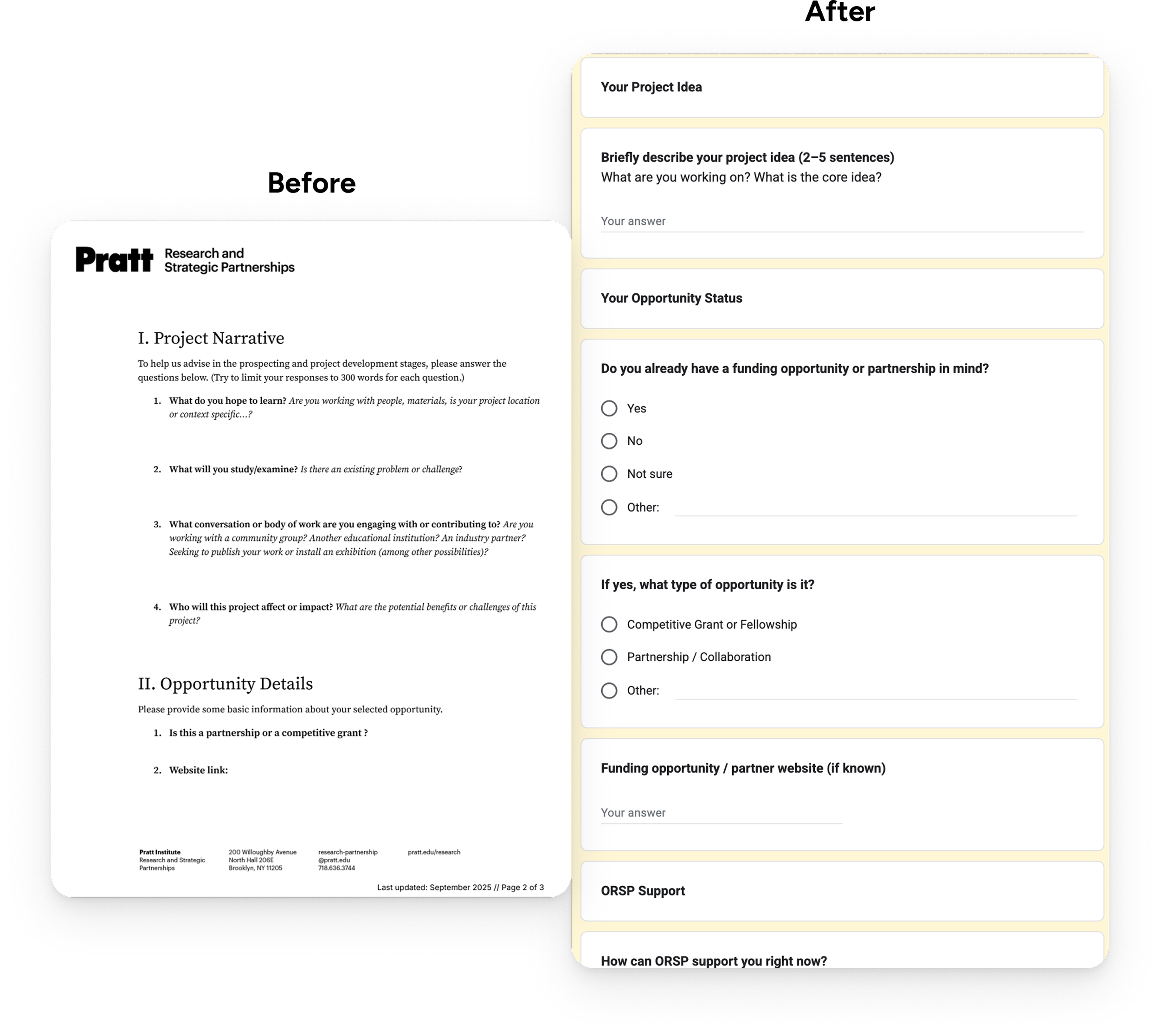
“Contact ORSP” shortcut → simplified Project Discovery form that helps ORSP understand faculty research ideas and ongoing projects
Why:
Faculty feel overwhelmed by ORSP’s website
Difficult to locate relevant resources
Reduces repetitive email inquiries
Improves access to research support
THEME: SUPPORT ENHANCEMENTS | PRIORITY: HIGHAppointment Scheduling System & ORSP Virtual Assistant
Key Features:
Automated appointment scheduling system
ORSP Virtual Assistant (chatbot)
Why:
Reduces friction with guided entry points
Cuts back-and-forth emails
Provides quick access to accurate information
Routes requests to the right ORSP staff
Improves efficiency and consistency

THEME: SUPPORT ENHANCEMENTS | PRIORITY: HIGHStrengthening ORSP Capacity for Art-Based & Intersectional Research
Strengthen ORSP capacity by appointing a specialist in art-based, practice-led, and intersectional research to guide faculty and translate creative work into formal research frameworks, reinforcing Pratt’s creative research identity.
The Big Picture
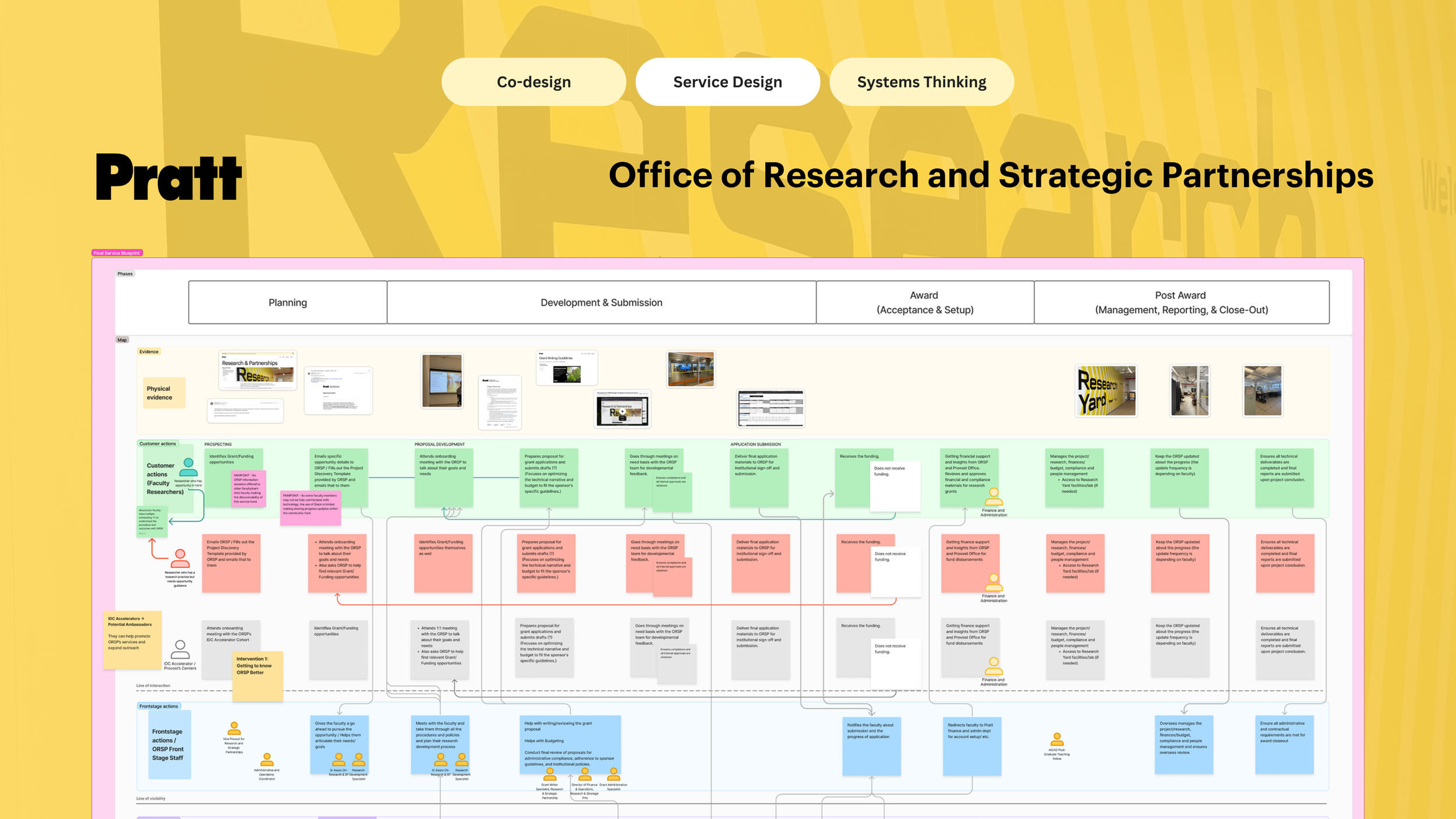
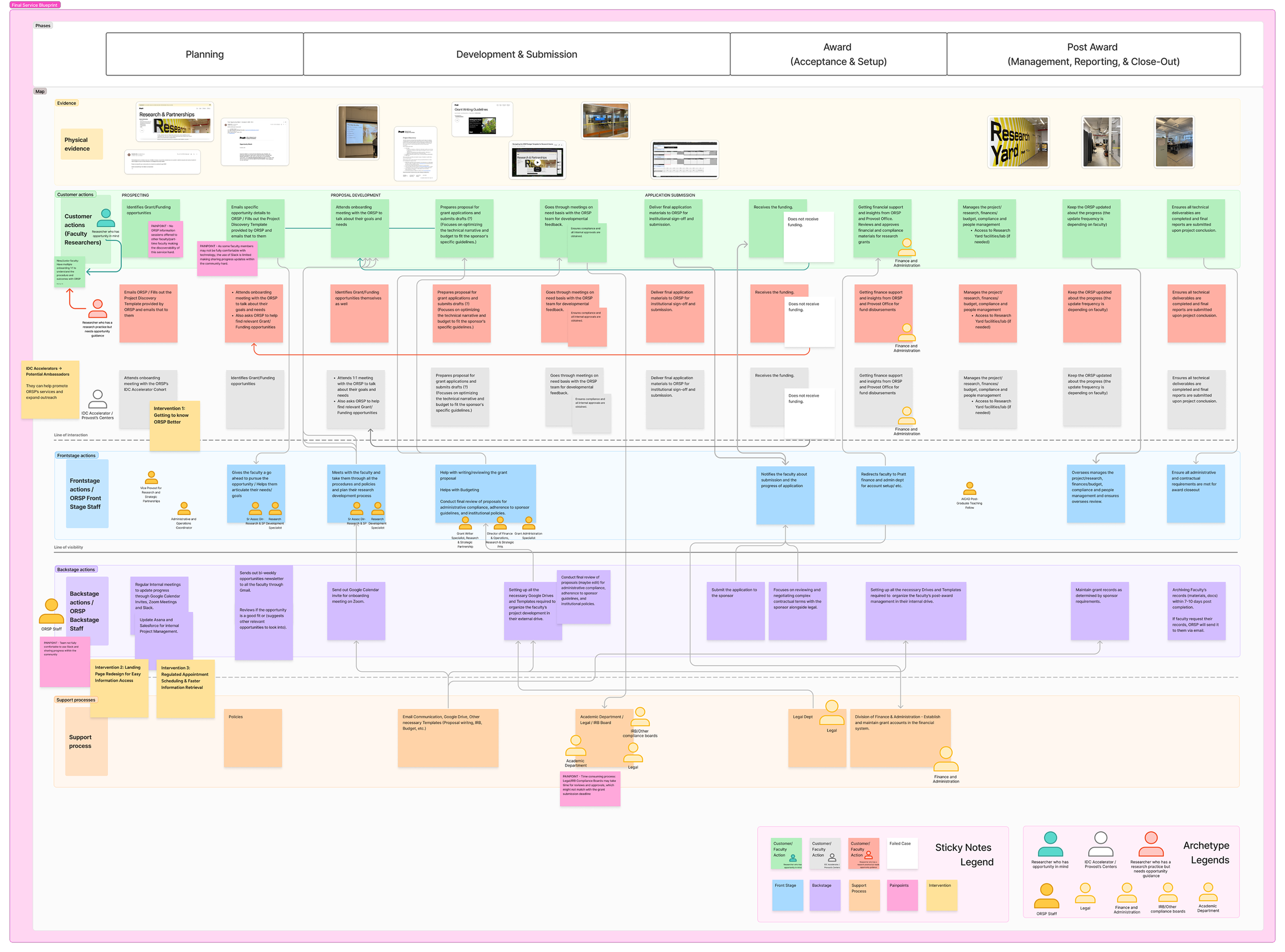
This service blueprint provides a holistic, end-to-end view of ORSP’s service delivery, expanded from pre-award to the full research lifecycle with a strong emphasis on the overall faculty experience.
Informed by service safaris, stakeholder/faculty interviews, and shadowing, it highlights key gaps and opportunities, and shows where targeted interventions make ORSP’s services more accessible, user-friendly, and aligned with the diverse needs of Pratt faculty.
Key Learnings and more…
Client Collaboration
Learning to translate the client brief into focused, actionable service design goals pushed me to think more strategically and align design decisions with real organizational needs.Participant Recruitment
I realized how much recruitment shapes the research itself. Working with busy faculty required proactive planning, flexibility, and thoughtful coordination to make participation feasible.Co-Design & Systems Thinking
Facilitating co-design workshops while thinking in systems was a meaningful learning curve. Balancing structure and openness, guiding conversations, and making space for diverse perspectives.
Conclusion
Want to dive deep?
View our full report for a comprehensive look at the research, process, and service design interventions.
“We really appreciate how the team comprehensively mapped our processes end-to-end and developed thoughtful archetypes. The proposed interventions give us a clear direction, and we’re excited to internally work through the logistics to begin implementing them.
”